

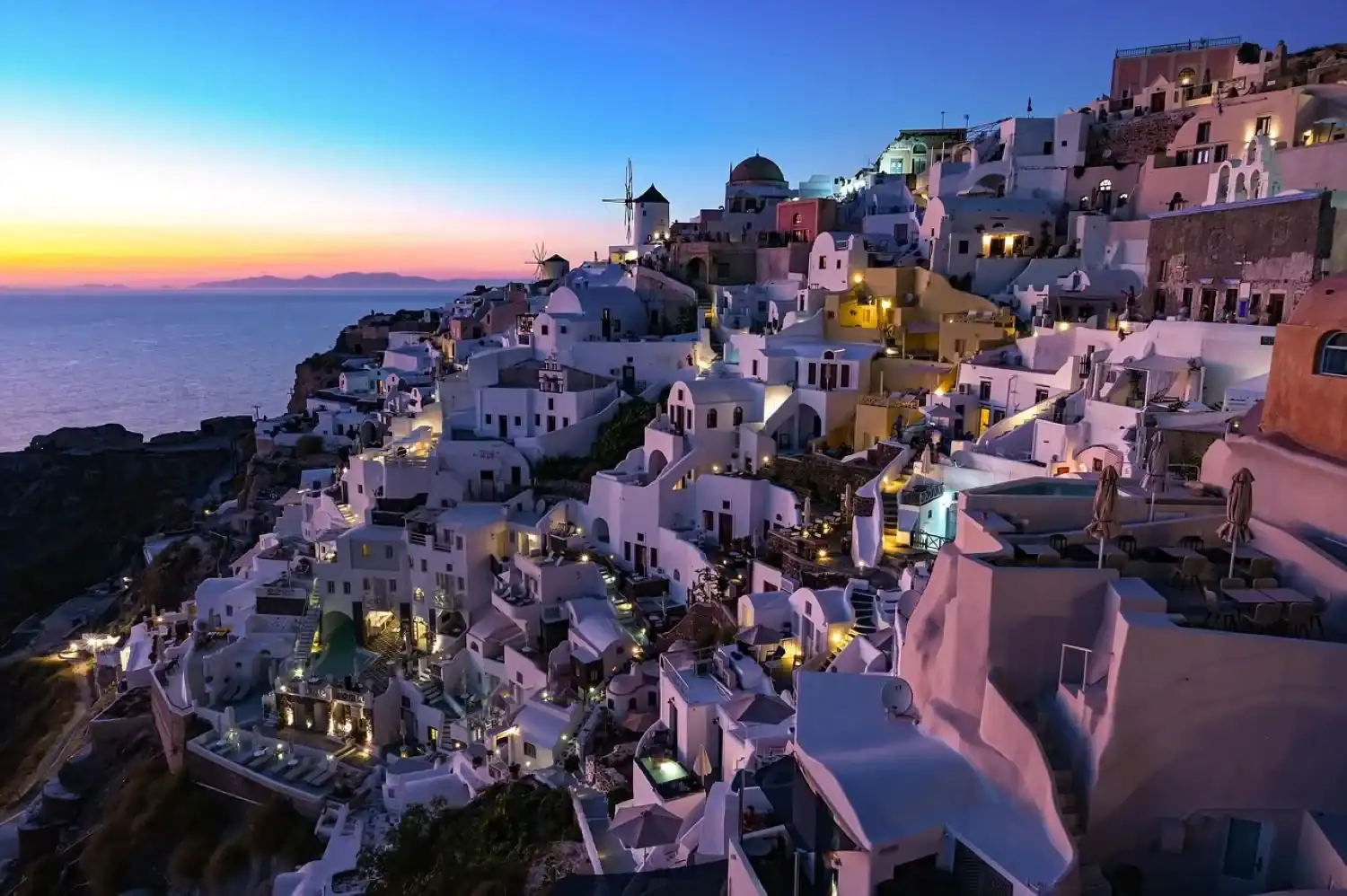
There’s something about Santorini that feels like stepping into a postcard — except better. It’s not just the domes or the sunsets. It’s the way the whitewashed walls glow in the morning haze, the lazy clink of wine glasses over cliffside dinners, and that cobalt Aegean backdrop that makes you seriously question your life choices back home. This Santorini travel guide isn’t just a checklist of what to do — it’s your ticket to the sensory overload you didn’t know you needed.
You won’t arrive in Santorini. You’ll descend, spiralling down into a caldera formed by one of the most cataclysmic volcanic eruptions in recorded history. And instead of chaos, you’ll find serenity: villages seemingly carved into rock, cliffside infinity pools, and the kind of golden-hour lighting that Instagram filters have been trying — and failing — to imitate for years.
Yes, Santorini’s famous. Yes, it’s photogenic. But it’s also surprisingly intimate. Step away from the crowd-thick alleys of Oia, and you’ll find vineyards tended by the same families for generations, tavernas where you’re served by the owner’s cousin, and hikes where your only company is the odd mountain goat and a sea breeze that smells faintly of thyme.
This Santorini travel guide is for the wanderer who wants the best of both worlds — the iconic and the obscure, the Instagram shot and the soul food. Over the next few minutes, you’ll wander through ancient ruins and modern wine caves, discover sunset spots that aren’t overrun by cruise crowds, and get a feel for what makes this island more than just a bucket-list tick box.
And yes — we’ll also talk about the donkeys. They’re part of the scenery, the legacy, and yes, the controversy.
Because that’s the thing about Santorini — it’s got layers. Not just volcanic ones, but cultural, historical, emotional. It’s a place you think you’ve seen a hundred times in brochures, but until you’ve been lost in the lavender twilight of Imerovigli or eaten fried tomato keftedes with your bare hands in a back-alley courtyard, you haven’t really been.
So let’s dive in. This Santorini travel guide will show you not just where to go, but how to feel while you’re there — and how to avoid the mistakes that rookie tourists make before their ouzo’s even hit the table.
Table of Contents
AFFILIATE DISCLAIMER
Some of the links in this post are affiliate links. If you click and book, I might earn a small commission — kind of like tossing a coin in my tip jar while I map out your next epic trip.
FROM LAVA TO LEGEND: SANTORINI’S VOLCANIC SOUL
To understand why Santorini feels so mythical, you’ve got to dig beneath the glossy surface — literally. The island’s dramatic beauty wasn’t sculpted by centuries of careful planning, but by one of the most explosive volcanic events in human history. Around 1600 BC, the island — then known as Strongyli — blew itself apart in a cataclysm so massive it helped sink the Minoan civilization and may have even inspired the legend of Atlantis. Not bad for a place now known for sunsets and wine.
This isn’t your typical white-sand Greek island story. The jagged cliffs you’ll gaze over in Imerovigli? They’re the collapsed rim of that ancient volcano, a caldera now half-submerged and hauntingly beautiful. The black-sand beaches of Perissa and Kamari? Lava fragments. Even the soil that nourishes Santorini’s stubborn little grapevines is part ash, part legend.
In this Santorini travel guide, you’ll uncover how this raw geological force shaped everything — not just the terrain, but the architecture, agriculture, even the psyche of the people who call it home. Buildings are dug into rock rather than built on top of it. Churches gleam under the sun as defiant little miracles. And the wine? It tastes like the earth, sea, and sky got drunk together and made a baby.
But don’t expect a dry history lesson here. Santorini wears its past like a well-loved linen shirt — not flashy, but full of character. Take Akrotiri, the “Pompeii of the Aegean.” This ancient settlement, buried in volcanic ash, was so well-preserved that you can still see frescoes, furniture, even three-story homes with indoor plumbing. You’ll walk through the ruins and imagine the heartbeat of a sophisticated Bronze Age society — one that vanished almost overnight, yet left whispers of itself in the dust.
Religion, too, is etched into the cliffs. The island is dotted with over 600 churches and chapels, many of them tucked into hillsides or perched on unlikely ledges. Some say there’s a church for every day of the year. Others claim that when the islanders couldn’t afford homes, they built churches to claim land instead. Either way, they’re as much a part of the skyline as the sun itself.
And then there’s the culture — equal parts stoic and celebratory. Santorini locals know how to party (the Assumption Day festival in Pyrgos is wild), but there’s also a groundedness here, a respect for ancestry and tradition. You’ll hear it in the music, feel it in the food, and see it in the weather-worn faces of those who still fish these waters or till these volcanic fields.
By now, your Santorini travel guide is already getting layered. Because Santorini isn’t just a place to take pretty pictures — it’s a living museum, a survivor, a storyteller. And every sunset, every ruined wall, every glass of assyrtiko wine tells a piece of that story.
You’re not just visiting a Greek island. You’re stepping into the myth.
VILLAGE VIBES: WHERE TO WANDER, WHERE TO HIDE
You’ll quickly realise that Santorini isn’t one place — it’s a patchwork of personalities stitched together by winding paths, sea views, and a shared obsession with looking fabulous against white walls. Each village feels like a different chapter in the same sun-drenched novel, and no proper Santorini travel guide would be complete without helping you decode the cast of characters.
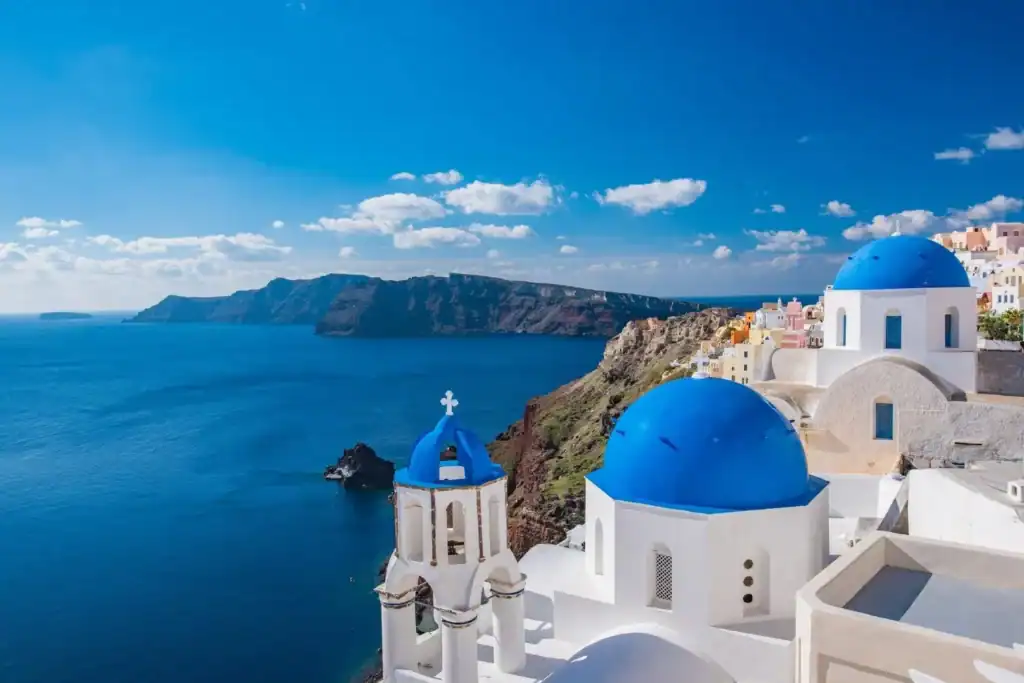
Let’s start with the diva — Oia (pronounced ee-yah), the postcard girl. Yes, it’s as stunning as they say. Blue domes? Tick. Sunset views that spark spontaneous applause? Tick. But here’s the thing: Oia knows she’s famous, and she acts like it. Expect high heels on cobbles, influencers balancing on walls, and boutique prices that think they’re in Paris. Still, early morning here is magic. Before the crowds wake up, wander its silent marble alleys, and you’ll swear time stands still.
Then there’s Fira, the island’s bustling capital. Picture a mini maze of shops, cafés, and cliffside bars stitched along the caldera’s edge. It’s louder, livelier, and more affordable than Oia — think Greek hustle with a stunning view. Fira’s where you’ll likely arrive, and probably return to when you need a pharmacy, a bus, or a cold Mythos to remind you that you’re still on holiday. Every good Santorini travel guide gives Fira credit — not for being fancy, but for keeping the island’s heart beating.
Craving something quieter? Say hello to Imerovigli, perched at the island’s highest point. It’s Oia’s quieter, more reflective sibling — all the views, none of the chaos. Think candlelit dinners, infinity pools, and silence so luxurious it almost hums. From here, you can walk the Skaros Rock trail, a rugged clifftop path that feels like it leads into the clouds. Imerovigli is where you go when you want to be in love, even if it’s just with your hotel balcony.
For a taste of real local life, head inland to Pyrgos. Twisting alleyways, sleepy cats, bell towers — this is old-school Santorini minus the price tag. Climb to the castle ruins at the top, grab a frappé at a family-run café, and soak up the kind of authenticity that can’t be booked online. Any Santorini travel guide worth its salt will tell you: Pyrgos is the soul of the island.
And finally, the black sand coast of Kamari and Perissa — resort villages where sunbeds line the beach and the vibe is gloriously low-maintenance. These aren’t cliff-clinging luxury spots, but they’re perfect if you want to swim, chill, or party without your wallet weeping.
Each corner of Santorini has a mood. Wild, romantic, practical, traditional — and everything in between. So give yourself permission to drift. The island’s small, but its stories stretch wide.
You’re not just finding a place to stay. You’re choosing which version of Santorini you want to remember.
TOP THINGS TO DO IN SANTORINI: THE GREATEST HITS (AND A FEW YOU’VE NEVER HEARD OF)
Right — let’s just get this out the way: you’re going to see the sunset in Oia. Everyone does. And honestly? It’s worth the hype — just don’t expect solitude. You’ll be shoulder-to-shoulder with hundreds of other people, all holding their breath for that golden dip. But here’s the hack: skip the castle ruins and head to the old windmill or a quieter rooftop bar. Same sky, less selfie-stick warfare. Because any decent Santorini travel guide should tell you — it’s not just what you see, it’s how you see it.
Next? Hike the caldera path from Fira to Oia. Don’t let the word “hike” scare you — it’s more of a scenic wander, about 6 miles of jaw-dropping clifftop drama. Do it in the morning or late afternoon to dodge the heatstroke. And bring water. And your camera. And maybe a better camera.
Fancy dipping into history? Akrotiri is a must. This ancient city was buried under ash for centuries, preserving everything from pottery to plumbing. It’s eerie and awe-inspiring. Unlike Athens, where the ruins feel like artefacts, Akrotiri feels alive. You half-expect its citizens to stroll back in any minute and ask what you’re doing in their living room.
But not everything in this Santorini travel guide is old stones and scenic walks. Sometimes, you need to let loose. Enter: a sunset catamaran cruise. These floating fiestas give you volcano views, Red Beach swims, and fresh grilled food with wine that somehow tastes better out at sea. It’s cliché, yes — but unapologetically fabulous.
Need a change of pace? Head to the clifftop village of Megalochori and get lost — on purpose. No agenda, no TikTok list. Just wander. It’s a place where doorways beg to be photographed and bougainvillea spills over every wall like it’s showing off.
And don’t forget the wine. Santorini’s volcanic soil produces assyrtiko grapes that punch well above their weight. Visit a winery — not just for the tasting, but to understand how grapes thrive in what looks like lunar dust. Gavalas, Venetsanos, Santo Wines — pick one, sip slowly, and marvel at how something so dry can be this intoxicating.
One more offbeat gem? The Emporio castle district. Hidden in the island’s south, it’s a tangle of medieval alleyways, arched tunnels, and pastel doors that feel more Moroccan than Cycladic. It’s not in every Santorini travel guide, but it should be.
Because that’s the beauty of Santorini. Yes, it’s packed with iconic sights. But the real magic? It’s in the detours — the tiny chapels, the half-empty cafés, the sound of your own footsteps echoing through a sunlit street no one else found.
You’re not here to follow the crowd. You’re here to write your own story, one volcanic vista at a time.
EPIC DAY TRIPS FROM SANTORINI: ESCAPES, ADVENTURES & A TOUCH OF MYTH
You’ve soaked in the sunsets, hiked the caldera, and polished off a bottle of assyrtiko or three — now it’s time to step off the tourist treadmill. Because one of the best things about this island is how quickly you can escape it. Day trips from Santorini don’t mean leaving the magic behind — they’re just another chapter in your Santorini travel guide, with a slightly different flavour.
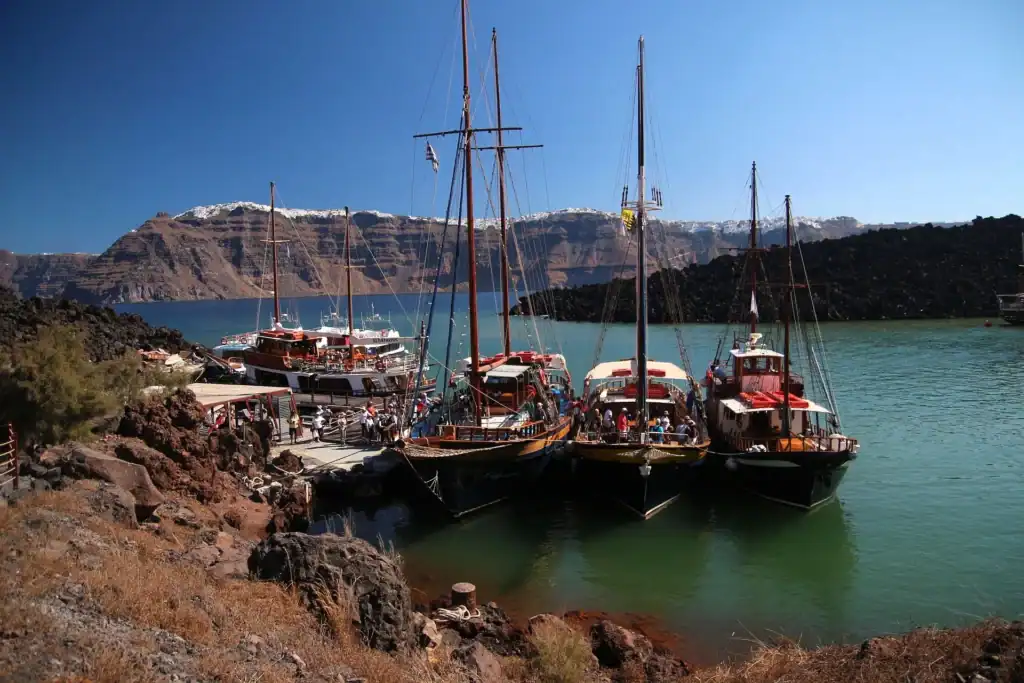
Let’s start with the big one: the volcano and hot springs tour. It’s the classic. You’ll hop on a traditional wooden boat (yes, it’s rustic — no, it’s not a luxury yacht), and putter across the caldera to Nea Kameni, the active volcanic islet smack in the middle of Santorini’s watery heart. The ground crunches underfoot, steam rises from fissures, and your inner geologist gets giddy. Then it’s on to Palea Kameni, where you can float in sulphur-rich hot springs that stain your swimsuit but leave your skin feeling like it’s been to a spa. This one’s a rite of passage — messy, smelly, unforgettable.
Next up: Thirassia. Think of it as Santorini’s shy cousin — similar volcanic DNA, but none of the crowds. Just a few sleepy villages, clifftop churches, and tavernas where the waiter’s also the cook, the owner, and your new best friend. It’s the kind of place where you’ll spend an hour watching goats argue with each other and somehow feel like you’ve had a productive day.
For something that feels like a cinematic set, Anafi is your wildcard. This teeny-tiny island east of Santorini is reachable by ferry (though the schedule’s as laid-back as the locals), and it’s pure Cycladic serenity. No busloads of tourists, no five-star resorts — just beaches, cliffs, and silence. If your Santorini travel guide has a hidden-gem section, this is it.
Prefer to stay on the main island but still escape the postcard crowd? Hire a quad bike or car and head south to Akrotiri Lighthouse. It’s the furthest point on the island, where waves crash against jagged rocks and the sky feels bigger somehow. Come at golden hour, bring snacks, and embrace the end-of-the-earth vibes.
Or if you’re after something totally surreal, visit Mesa Gonia, the so-called “ghost village” abandoned after the 1956 earthquake. Now partially restored, it’s both eerie and oddly beautiful — a silent reminder of the island’s fragility beneath the glamour.
A good Santorini travel guide won’t just show you the top-rated sights — it’ll urge you to step off the polished stone paths and into the rough, real edges of the Aegean. That’s where you’ll find moments you’ll remember long after the tan fades.
So pack a day bag. Charge your phone. And maybe leave the itinerary behind.
The best kind of escape doesn’t always come with a plan.
EAT, DRINK, SANTORINI: THE FLAVOURS THAT STICK WITH YOU
Santorini doesn’t whisper flavour. It sings it — full-throated, sun-ripened, and unapologetically bold. Every meal here is a love letter to volcanic soil, stubborn farming, and centuries of doing things the old-school way. If there’s one thing this Santorini travel guide will insist on, it’s this: do not diet here. You’ll regret it. Hugely.
Start simple. Tomatokeftedes — fried tomato fritters so crispy and fragrant they’ll haunt your dreams. Grown from cherry tomatoes that thrive in the island’s dry soil, they’re a lesson in how limited ingredients can pack a punch when handled by someone’s yiayia. Dunk them in tzatziki. Wash them down with a chilled glass of white. Repeat as necessary.
Then there’s fava — not beans, but a silky yellow split-pea puree. Earthy, creamy, and often topped with caramelised onions or capers, it’s the kind of starter that makes you pause mid-bite and say, “Wait — what is this?” You’ll find it everywhere, but for the good stuff, look inland. Family-run tavernas in Pyrgos or Exo Gonia won’t steer you wrong.
Santorini’s seafood? As fresh as it gets. Picture grilled octopus with lemon and olive oil so perfect you might cry. Or a plate of calamari eaten barefoot at a beach taverna in Kamari. This is where a proper Santorini travel guide earns its stripes — by leading you away from overpriced caldera-view menus and straight into the arms of a backstreet ouzeri where they don’t bother with menus at all.
Speaking of views though… sometimes you do want that clifftop drama. Book a table at a rooftop restaurant in Imerovigli — just once. Sure, it’s not cheap. But when the sun dips into the caldera and the sky goes lavender-orange, your grilled sea bream suddenly feels like a religious experience. And if they offer you rakomelo afterwards? Say yes. It’s like spiced honeyed fire in a shot glass. Dangerous. Delicious.
For wine lovers, this island is a playground. The assyrtiko grape rules the roost — crisp, citrusy, grown in basket-shaped vines that hug the volcanic soil like sleeping snakes. Visit a vineyard or three (seriously, you can’t throw a stone without hitting one). Santo Wines is popular, but Gavalas or Hatzidakis feel more intimate. A good Santorini travel guide doesn’t just say “go wine tasting.” It tells you to sip slowly, with olives, and a view of the sea, and absolutely no plans for the rest of the afternoon.
And coffee? Greek-style — thick, muddy, served with a stern look if you ask for oat milk. Drink it slowly in a village square, under a faded awning, with nothing to do but eavesdrop and watch the world melt in the heat.
Santorini doesn’t just feed you. It seduces you with every bite, every glass, every lazy, laughter-filled meal that turns into an evening. This island tastes like summer, like memory, like you might never want to leave.
FREQUENTLY ASKED QUESTIONS ABOUT SANTORINI
1. When’s the best time to visit Santorini?
Late April to early June and September to mid-October hit the sweet spot — warm weather, fewer crowds, and better prices. Avoid peak July-August unless you enjoy queuing for sunsets.
2. How many days do you need in Santorini?
Three full days is enough to see the highlights, but five lets you slow down and actually feel the island.
3. Is Santorini expensive?
In a word — yes. It’s the A-lister of the Cyclades. But budget options exist, especially if you stay inland or travel outside peak season.
4. What’s the best way to get around the island?
Local buses are cheap and reliable, but hiring a quad bike or small car gives you freedom to explore the quiet corners. Just don’t expect smooth roads everywhere.
5. Can you drink tap water in Santorini?
Technically yes, but locals don’t. Stick to bottled water for drinking — it’s cheap and widely available.
6. Do I need cash or can I pay by card?
Cards are accepted almost everywhere, but carry a bit of cash for small tavernas, bus fares, and beach bars.
7. Is it safe to travel solo in Santorini?
Absolutely. It’s a safe, welcoming destination with friendly locals — though some of the cliff paths are best avoided at night.
8. What should I pack for Santorini?
Light layers, decent walking shoes (those cobbles aren’t kind), swimwear, sun protection, and something that makes you feel fabulous at sunset.
9. Where do cruise ships dock?
At the port of Athinios. From there, passengers usually take a tender to the base of Fira’s cliff — then ride the cable car or hike up (or ahem, donkey).
10. Is Santorini suitable for kids?
Yes, but it depends on the kids. There’s no shortage of views and beaches, but not a ton of child-specific attractions. Young ones might struggle with the stairs and heat.
USEFUL INFORMATION
Booking.com – Santorini Hotels
Browse a wide range of accommodation in Santorini — from cliffside suites to beachfront apartments in Kamari and Perissa.
Trip.com – Santorini Travel
Book flights, hotels, and travel packages with options tailored to Santorini and the Greek islands.
Viator – Santorini Tours
Find and book everything from volcano hikes to wine-tasting cruises and private photo shoots.
GetYourGuide – Santorini Activities
Trusted for skip-the-line tickets, day trips, and local tours with flexible cancellation options.
Klook – Santorini Experiences
Alternative tours, transfer services, and SIM/eSIM packages for a hassle-free visit.
Trainline – Greek Rail & Coach
If you’re connecting via Athens or Thessaloniki, this is your go-to for mainland Greece train and bus travel.
HolidayTaxis – Santorini Transfers
Book private or shared transfers between the airport, ferry port, and your hotel — easy and pre-paid.
DiscoverCars – Santorini Car Hire
Compare rental options from top-rated providers — ideal for reaching remote beaches and inland villages.
Radical Storage – Santorini
Secure your luggage for a few hours or a full day with locations across the island including Fira and near ports.
Vrbo – Santorini Holiday Rentals
Search for family-friendly villas and private homes with self-catering options across Santorini.
Agoda – Santorini Hotels
Often includes flash deals and promotions for stays in quieter or off-peak parts of the island.
Trivago – Santorini Hotel Comparison
Compare prices across platforms to grab the best deals on hotels, apartments, and resorts.
Tripadvisor – Santorini Travel Forum
Read reviews, browse restaurant rankings, and ask travel questions in the Santorini forum.
Ticketmaster Greece
Check for concerts, theatrical performances, and cultural events during your trip.
VisitGreece.gr – Official Tourism Site
The official site of the Greek National Tourism Organisation — packed with current advice and travel inspiration.
Santorini.net – Local Travel Guide
Run by locals, this site covers real-time ferry schedules, island news, and practical insights.
SantoriniView.com – Explore the Island
Maps, hidden beaches, walking routes, and guides to villages beyond the typical tourist trail.
OTHER RELATED POSTS
The Most Beautiful Unknown Islands in Europe You Can Still Visit This Summer