

Where Time Slows and the Breeze Remembers
There’s something almost cinematic about arriving on St. Simons Island. The bridge stretches long and low across the salt marsh, where water glitters silver beneath the morning sun and egrets stand frozen like sculptures. The radio fades, your phone signal flickers, and suddenly it’s just you, the road, and the hush of Spanish moss swaying in the breeze.
This isn’t a place that demands attention. It doesn’t shout. It just lets you be. No big resorts looming overhead. No clattering boardwalks or glowing neon. St. Simons drifts at its own pace, and if you let it, it’ll pull you into that rhythm. You’ll forget you ever rushed.
Table of Contents
EpicTripFinder.com participates in affiliate programs. This means we may earn a commission when you book through links on our site—at no extra cost to you. We only promote destinations and experiences we believe in. Thank you for supporting independent travel blogging.
The first thing that hits you is the light—golden, diffused, lazy. It stretches over weathered cottages and marsh grass, settles on the porches of old Southern homes, and dances across bike spokes as visitors roll slowly through tree-lined streets. There are no skyscrapers here, just treetops and tides.
People wave here. Not the kind of stiff, awkward wave you get in cities, but a natural, easy flick of the hand from a passing cyclist or a shopkeeper sweeping the sidewalk. It feels like stepping into a forgotten version of America—something more gentle, more deliberate.
By the time you’ve parked beneath the oaks, heard the gulls overhead, and smelled the pine-salt air rolling in from the coast, you’ll already feel different. Lighter. Calmer. Ready.
Because here, doing nothing is kind of the point.
Driftwood Days and Saltwater Mornings
Mornings start slow on St. Simons. You’ll likely wake to soft light pouring through gauzy curtains and the faint creak of trees outside your window. There’s no rush. No need for alarms. The island itself seems to sleep in, stretching out like a cat in the sun.
You step outside barefoot, coffee in hand, and everything feels muted. The street’s empty, the air smells like dew and brine, and your only plan is to wander. East Beach calls first—wide, pale, and so peaceful it hardly feels real. The sand squeaks underfoot. The tide’s pulled way out, revealing little tidal pools where children poke sticks and parents just stand there, smiling.
Driftwood lies scattered like bones on the sand—giant bleached trunks twisted by time and tide. It’s art, accidental and perfect. Someone’s built a teepee of branches. Someone else has carved initials into a sun-bleached log. And over it all, the surf whispers.
Later, you might rent a bike. Not because you’re in a hurry—just because it’s the best way to feel the island under your skin. You pedal lazily past moss-covered oaks and picket fences, past small bookstores and cafés with porch swings and hand-painted signs.

And if you do nothing more than ride in circles and stop for lemonade or shrimp tacos along the way, that’s enough. That’s the whole point. You’re not checking things off. You’re not rushing to finish anything.
You’re just there, in it. And that’s the kind of morning that lingers long after you’ve left.
Afternoons for the Curious and the Quiet
By midday, the island is humming quietly. Not buzzing—humming. Conversations drift from open windows, screen doors creak, and somewhere a lawn sprinkler ticks rhythmically against the afternoon heat. You don’t need to plan much. The best days here unfold one gentle whim at a time.
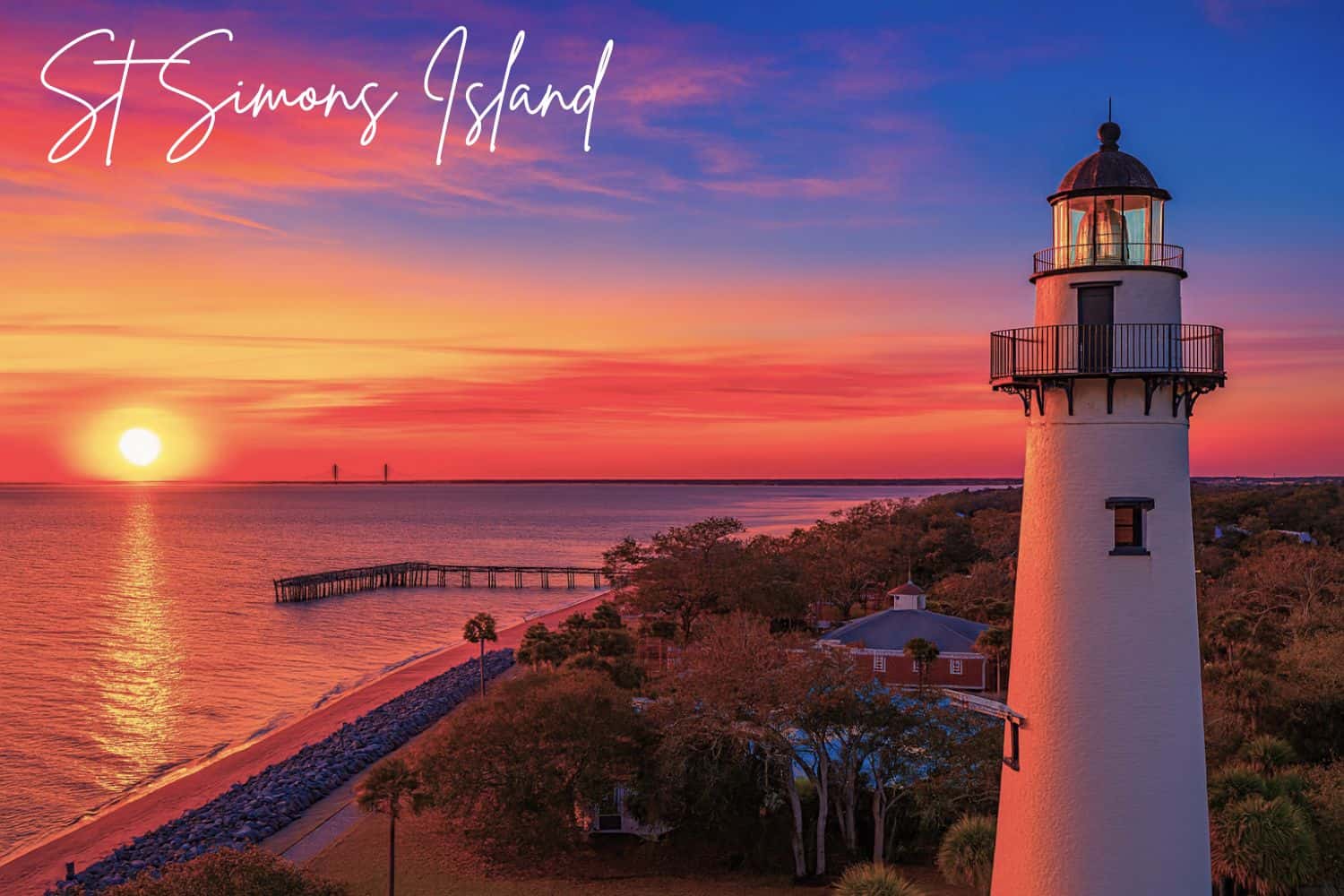
Maybe you’re curious. Maybe history calls. So you follow a shaded lane to the old lighthouse, rising stoically by the sea. Inside, it’s cool and still. Each narrow step upward brings the scent of old wood and salt. At the top, the view is pure storybook: rooftops peeking through trees, sailboats bobbing offshore, the curved horizon blending sky and sea like a watercolor wash.
Down the road, Fort Frederica waits among ancient oaks. The ruins are scattered and sun-dappled, moss hanging like chandeliers. There’s silence, except for birds and your footsteps crunching gravel. It’s peaceful and slightly eerie—like history’s still breathing here.
If you’re more into small-town soul than stone walls, take the afternoon to explore the pier village. It’s charming without trying. Ice cream parlors hum with chatter. Antique stores spill out onto the sidewalk. A man plays blues guitar outside a café while locals drink sweet tea and wave to everyone who walks past.
You might pause by the oceanfront playground or just sit on a bench, watching boats drift in and out of the harbor like lazy thoughts. There’s no pressure to move fast, no pressure to move at all.
Some places are made for curiosity. Others are made for stillness. St. Simons lets you choose both in the same afternoon.
When the Sun Sinks and the Island Glows
Evening comes softly on St. Simons. The light shifts again—less golden, more copper now—casting long shadows and lighting up the marshes like they’re on fire. It’s the kind of hour that makes you stop mid-sentence just to watch the way the light hits the trees.
People gather at the pier to watch the sun melt into the water. Not in a crowd, not with loud countdowns or clapping—just quietly, like a shared secret. Kids run along the boards. Grandparents hold hands. Teenagers whisper over milkshakes. Everyone is there for the same unspoken reason: to feel a little smaller, a little more connected to the sky.
Dinner’s wherever you find it. A seafood shack with picnic benches. A candlelit bistro tucked behind a row of flowering bushes. Maybe you pick up something simple and eat it back at your rental with bare feet and a cold drink. It doesn’t matter. The food’s almost secondary to the way it feels to eat it here—with salt still on your skin and the hum of cicadas in the background.
And after dinner? Maybe nothing. Maybe everything. A walk. A swing beneath a tree. A quiet talk on a porch, drink in hand, as the sky shifts from lavender to navy.
Some places wind you up. St. Simons winds you down.
And it does so beautifully.
The Island That Comes Home With You
The funny thing about St. Simons is that you never really “leave” it. Oh, you’ll pack your bag. You’ll cross that same bridge back to the mainland. The trees will thin out. The traffic will grow. The noise of regular life will start creeping back in.
But the island clings to you.
Maybe it’s the rhythm you fell into—the slower steps, the longer silences, the sense that everything important could happen without a screen or a schedule. Maybe it’s the smell of salt and pine that comes back to you in dreams. Or the way you learned to love the sound of birds and creaking porches more than any playlist.
You’ll notice it in small things. You’ll eat slower. You’ll wave to strangers. You’ll find yourself looking for hammocks or craving seafood that doesn’t come in a box. And one day, without meaning to, you’ll open your browser and type those words again—St. Simons Island—just to see it.
Some trips fill a weekend. A few fill a photo album. But the rare ones, the ones that change you just a little… they fill a corner of your soul and refuse to leave.
St. Simons is one of those rare ones.
And the best part? It’ll be right there, waiting, whenever you’re ready to return.
Some Other Posts You May Enjoy :
Best Beach Vacations USA Summer 2025
Napa Valley & Sonoma Private Wine Tour 2025: A Luxurious Escape from San Francisco