Ready for a true escape? The wild, isolated Chausey Islands completely rewrite the rules of travel, morphing from 52 granite outcrops to 365 sandbanks daily. Mastering the extreme Atlantic tidal logistics is your key to conquering this breathtaking French paradise.
Table of Contents
Use the links below to jump straight to specific logistical sections:
- •
Getting to Your Launchpad Port - •
The Basecamp Strategy: Sleeping Near the Docks - •
The Core Logistical Monster: The Tides - •
Choosing Your Vessel and Crossing the Channel - •
The Strict Daily Cap and Booking Traps - •
Digital Lifelines on a Granite Rock - •
Landing on Grande Île: Footpower and True Isolation - •
The Survival Pack: Food and Water Realities - •
Scrambling the Rocks and the Tide Trap Warning - •
Overnighters and the Eco-Rules of the Archipelago - •
Leaving No Trace: The Garbage Logistics - •
The Ultimate Escape Plan: Departure Realities
Chausey Archipelago Interactive Map
Use this interactive layout to pinpoint Grande Île and visualize its distance from your mainland launchpads at Granville and Saint-Malo. You can drag, scroll, and zoom in to scope out the vast network of sandbanks and granite reefs that completely change the shape of this region when the tide drops away.
Tip: Zoom in close on the hybrid satellite view to see how shallow the surrounding waters are—it shows you exactly why the local ferries have to dance around the shifting tides!
Logistics of Visiting the Remote Islands of the Chausey Archipelago
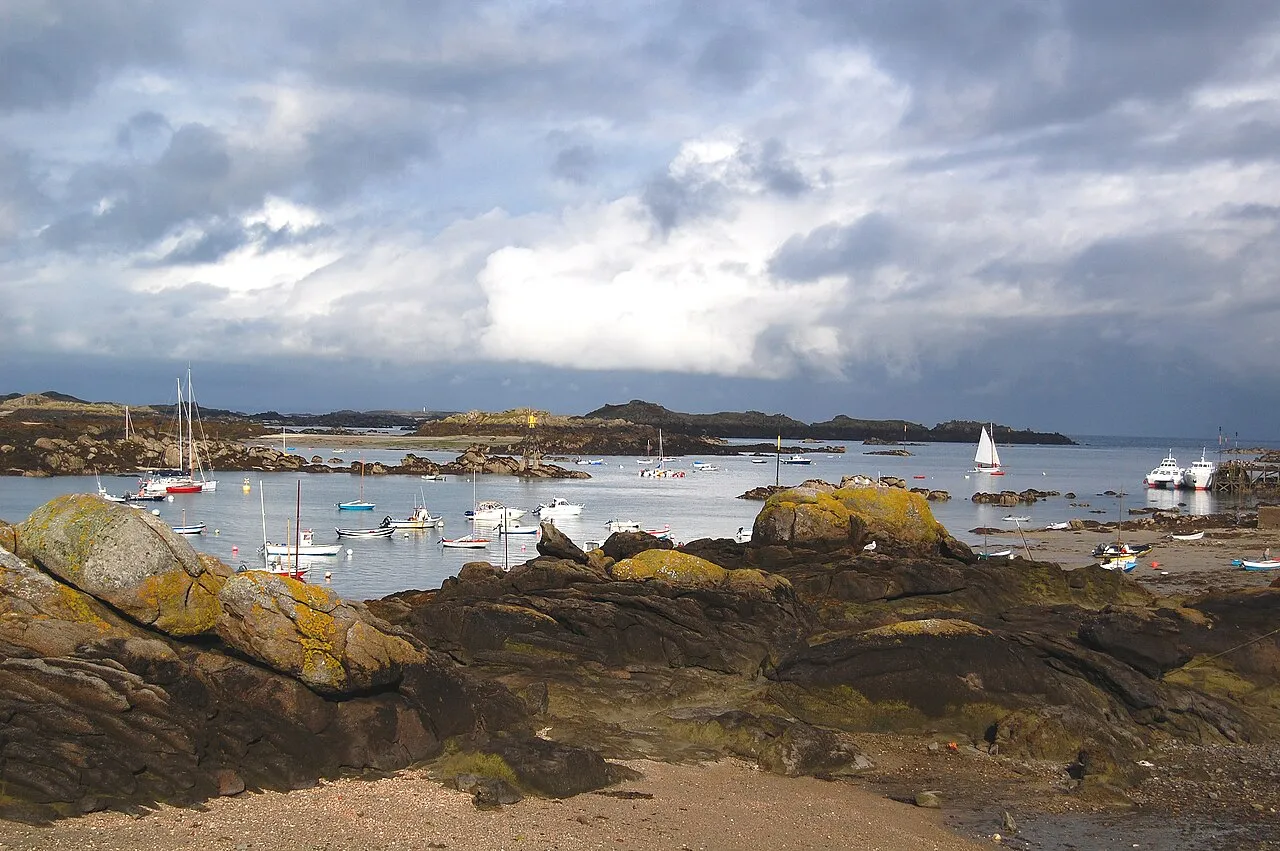
Imagine an island paradise that literally changes its shape and size depending on the time of day. Welcome to the Chausey Islands, a stunning, granite archipelago sitting just off the coast of Normandy. At high tide, it looks like a modest cluster of 52 distinct islands peeking out from the Atlantic. But when the water recedes at low tide, the ocean floor drops away to reveal a mind-boggling labyrinth of 365 islets, reefs, and shimmering sandbanks. It is Europe’s largest archipelago, yet because it’s entirely car-free and fiercely protected, figuring out how to actually get there, where to park, and how to time your visit can feel like a bit of a logistical puzzle.
Quick heads-up: Some of the links in this post are affiliate links. This means if you book a tour or secure a room through them, I earn a small commission at zero absolute extra cost to you. I only suggest things I genuinely trust, and your support keeps this site running!
Getting to Your Launchpad Port
The Chausey Islands sit roughly 18 km (around 11 miles) off the coast of Granville in Normandy, which serves as the primary gateway for the archipelago. Your other alternative is launching from the historic pirate town of Saint-Malo in Brittany. Because these ports sit in relatively remote, rugged corners of northern France, relying solely on regional trains can leave you stranded with tight ferry connections.
If you’re planning a proper northern French road trip to hit these coastal towns, your best bet is sourcing a solid rental set of wheels right from the airport when you land. To avoid getting completely stung by massive credit card deposits or sneaky hidden fees at the arrival desk, I highly recommend using DiscoverCars to compare local rates and lock in full insurance coverage ahead of time. If you prefer sticking with a long-running, household European broker that has been around for decades, check out AutoEurope to cross-reference prices and grab the best compact car for navigating narrow French village lanes.
The Basecamp Strategy: Sleeping Near the Docks
Do not try to make a mad, multi-hour dash from Paris or deep inland on the morning of your boat trip. The local ferry timetables are completely dictated by the moon and the sea, meaning departures can happen brutally early in the morning. If you miss your window, you’re out of luck.
The smartest move is treating Granville or Saint-Malo as your basecamp the night before. Both towns are absolutely packed with maritime charm, incredible seafood spots, and brilliant places to stay. To secure a boutique harbor-view apartment or a cozy hotel right next to the ferry terminals, spend some time digging through options on Booking.com. Locking down your room a few months in advance is vital, especially during the frantic summer peak when French holidaymakers flock to the coast.
The Core Logistical Monster: The Tides
Before you even look at buying a boat ticket, you have to understand the local environment. This region faces some of the highest, most dramatic tides in the entire world, featuring a massive tidal range of up to 14 metres (about 46 feet) during spring cycles.
This means two things for your itinerary. First, the landscape you see at 9:00 AM will look completely unrecognizable by 3:00 PM. Second, the ferry departure and arrival times shift slightly every single day to ensure the vessels don’t scrape their hulls on emerging granite rocks. You cannot just turn up at the port expecting a standard hourly shuttle service.
Now that you understand the wild environment you’re dealing with, we need to look at the actual water crossing itself, how to navigate the competing ferry operators, and what ticket traps you need to dodge to avoid a very expensive mistake.
Choosing Your Vessel and Crossing the Channel
To get your boots on the main island—Grande Île—you have two primary choices of port, and both operate completely differently.
The undisputed heavyweight champion of Chausey logistics is the town of Granville. From here, the official ferry company is Vedettes Jolie France. They run a dependable service all year round, and the crossing takes a swift 45 minutes to cover the 18 km (about 11 miles) of Atlantic water. A standard adult return ticket will set you back roughly €31 (around $33 USD). During the peak summer season, they might run up to three or four trips a day, but in the dead of winter, this can drop to just a few crossings a week.
Your second option is launching from Saint-Malo using Compagnie Corsaire. This route is much more seasonal, generally operating only from April through to September. Because Saint-Malo sits further away, the journey takes about 1 hour and 15 minutes. It is a brilliant option if you are already basecamped in Brittany, but keep in mind it runs less frequently than the Granville boats.
The Strict Daily Cap and Booking Traps
Here is a mistake you absolutely do not want to make: showing up at the pier in July or August expecting to buy a ticket at the window. Because the Chausey Archipelago is a highly protected ecological reserve, local authorities enforce a strict daily cap on the number of visitors allowed onto the islands to prevent them from being trampled by over-tourism.
When the weather forecast looks beautiful, tickets sell out weeks in advance. If you don’t book your slot online ahead of time, you will be left standing on the quay watching the ferry pull away without you.
Furthermore, because those departure times change daily based on the tides, missing your specific slot means your day trip is completely ruined—there is no “next boat in twenty minutes.” If you are arriving via the regional train network into stations like Rennes or Granville and cannot afford a single minute of delay, booking a personalized private transfer through Welcome Pickups is a massive lifesaver. They track your transit arrival in real time, and a local driver will meet you right at the platform to speed you straight to the ferry terminal, completely avoiding the stress of hunting down an unvetted local taxi.
Digital Lifelines on a Granite Rock
Once your ferry docks at the small pier on Grande Île, you are officially off the grid. There are no cars, no scooters, and exactly zero ATMs. While you can see the French mainland on a clear day, the cellular signal on the island can be incredibly temperamental. As your phone bounces between different regional masts or gets blocked by thick granite cliffs, you can easily drop into dead zones.
To make sure you don’t lose access to live tidal maps, digital walking trails, or the ability to check weather updates, make sure your tech is sorted before you step off the boat. Activating a prepaid European eSIM from Airalo before you depart ensures your phone latches onto the strongest available data network the second you land, keeping you fully connected without risking crazy roaming surcharges.
Now that you know how to secure your boat tickets and get to the pier on time, we need to talk about what actually happens when you step onto the island—specifically, how to navigate the footpaths, what survival gear you must pack, and how to avoid getting trapped by the incoming sea.
Landing on Grande Île: Footpower and True Isolation
The second you step off the gangway onto Grande Île, you will notice something beautiful and slightly disorienting: the complete absence of engine noise. There are no cars, no delivery vans, and no scooters zooming past. The only way to get around Europe’s largest archipelago is on your own two feet.
The main island is tiny—stretching only about 1.5 km from tip to tip (around 1 mile)—but don’t let its small size fool you. The terrain is a mixture of sandy beaches, winding gorse-lined dirt tracks, and slippery granite rocks. If you are visiting Chausey as a day trip while moving between hotels on the mainland, do yourself a massive favor and do not drag your heavy rolling suitcases onto the ferry. There are no luggage lockers on the island, and pulling a 20 kg (about 44 lbs) bag through loose sand is a fast track to misery. Instead, dump your heavy gear with a verified local shop or café on the mainland using Radical Storage before you board, letting you explore the cliffs completely hands-free.
The Survival Pack: Food and Water Realities
Here is a bit of real talk for your pack list: Chausey is not a commercialized resort island. It is a rugged, live eco-system where a tiny permanent population of under 30 people lives year-round. Because of this, the island’s infrastructure is incredibly bare-bones.
There is exactly one hotel-restaurant (Hôtel du Fort et des Îles) and a single small grocery store that opens its doors strictly during the warmer summer months. If you visit in the shoulder season, or if the grocery shop happens to close early because they ran out of stock, you are completely out of luck. A simple sandwich or a bottle of water can suddenly become the rarest commodities on the island.
Always pack your own survival kit before leaving Granville or Saint-Malo. Bring plenty of water, some high-energy snacks, and a solid windbreaker jacket. Even if mainland France is baking in a blistering 28°C summer heatwave (around 82°F), the sea breeze out on the Atlantic cliffs can drop the real-feel temperature down to a chilly 18°C (roughly 64°F) in a matter of minutes.
Scrambling the Rocks and the Tide Trap Warning
The absolute highlight of visiting Chausey is exploring the hidden coves and walking out onto the vast sandbanks during low tide. The locals are obsessed with pêche à pied (foot fishing), where they wander out onto the exposed seabed to harvest clams, lobsters, and wild mussels from the rock pools.
However, this is where the island’s logistics turn from a fun adventure into something genuinely dangerous. Because the tidal range is so extreme, when the ocean decides to come back in, it moves with terrifying speed—frequently described by locals as moving like a galloping horse. The seabed around Chausey isn’t flat; it’s full of deep trenches and hidden gulleys. If you wander too far out onto the rocks without keeping an eye on the clock, the water will fill in the low-lying channels behind you first, completely cutting you off from the main island before you even realize you’re in trouble.
Because you are scrambling over wet, razor-sharp barnacles and jagged granite blocks with zero hospital facilities on-site, a simple slip or a twisted ankle out here can escalate into an emergency maritime evacuation. Before you go playing explorer on the Atlantic seabed, make sure you’ve sorted a dependable safety net like VisitorsCoverage to protect yourself against unexpected medical extraction costs, ensuring total peace of mind while you’re off the grid.
Now that you’re safely packed and clued up on how to survive the daily tidal shifts, we need to look at the final piece of the puzzle: your options for staying overnight on the archipelago, how the island handles its strict eco-rules, and the ultimate departure logistics to make sure you actually get back to the mainland.
Overnighters and the Eco-Rules of the Archipelago
If a few hours on Grande Île doesn’t feel like enough, you can actually stay overnight. Once the last evening ferry pulls away, taking the massive crowds of day-trippers with it, a magical, eerie silence descends on the archipelago. You basically get the entire island universe to yourself.
But your options for a bed are incredibly slim. There is exactly one hotel on the island: the Hôtel du Fort et des Îles. It only has a handful of rooms, and they are treated like gold dust by French travelers. A double room here will generally run you upwards of €150 (roughly $162 USD) per night, and you need to book it up to a year in advance. You can occasionally find local fishermen renting out basic stone gîtes, which you can track down by keeping an eye on Booking.com for any rare island listings or high-quality fallback spots back on the Granville marina.
Whatever you do, don’t pack a tent thinking you can just pitch up wherever you fancy. Because the archipelago is a highly protected bird sanctuary, wild camping is strictly illegal. If the local Gendarmerie catches you unrolling a sleeping bag on the dunes, you’ll be hit with a brutal fine that will completely ruin your holiday budget.
Leaving No Trace: The Garbage Logistics
Because Chausey doesn’t have a municipal waste management system like a standard town, managing trash is a massive logistical headache. Every single piece of plastic wrapper, empty tin, or apple core brought onto the island has to be shipped right back off it.
There are no public rubbish bins scattered along the coastal paths. The rule here is simple and old-school: pack it in, pack it out. Bring a small, dedicated trash bag inside your daypack to hold your rubbish until you get back to the mainland. It keeps the beaches pristine and ensures the local population of cormorants and seals doesn’t end up choking on your sandwich wrappers.
The Ultimate Escape Plan: Departure Realities
When it’s time to head home, do not play fast and loose with the ferry schedule. If the captain says the final boat departs at 5:30 PM, you want to be standing on that concrete pier by 5:00 PM at the absolute latest. Because of those extreme tidal shifts, the boat leaves precisely when the water allows it to—it cannot wait for stragglers. If you miss it, there is no backup water taxi, and you’ll be sleeping under the stars (and dodging those park rangers).
Furthermore, always check the sea conditions on the morning of your trip via the official Normandy Tourism Board. The English Channel can turn incredibly nasty with very little warning. If a sudden Atlantic gale rolls in, the ferry operators will cancel all crossings for the day to avoid smashing their boats against the granite reefs. Always build a “buffer day” into your wider travel itinerary so that a cancelled ferry doesn’t cause a stressful chain reaction.
If a sudden maritime delay does cause you to miss your train back to Paris or your flight out of Charles de Gaulle, don’t panic. If the knock-on effect impacts your flights home across Europe or back over the Atlantic, you can use AirHelp to check if you are eligible for cash compensation under consumer protection laws.
While you’re sitting around the crowded Granville or Saint-Malo ferry terminals waiting for your train connections, you’ll likely want to jump onto the free public Wi-Fi to upload your best island photos to social media. Just remember that open, unverified public networks are absolute playgrounds for data thieves looking to snag passwords or banking details. Fire up NordVPN before you connect to encrypt your data and keep your personal details completely locked down while you travel.
🇫🇷 More Expert France Travel & Logistics Guides
- Once you have finished exploring Normandy’s magnificent offshore archipelagos, continue further up the coast to dive into local artisan cider markets and smart Honfleur car parking strategies.
- For those looking to journey further south and uncover Brittany’s largest, most dramatic offshore gem, make sure to read up on the complete Belle-Île-en-Mer transport and driving logistics.