Planning a dream Greek island escape? Don’t let chaotic ferry ports, missing taxis, and tight airport dashes ruin your holiday. This blunt guide shows you exactly how to conquer the Cyclades transport hubs like an absolute pro with total ease.
Mastering the Cyclades: What’s Inside
- 1. The Mainland Launchpads: Piraeus vs. Rafina
- 2. Surviving the Airport-to-Port Dash
- 3. Stepping Into the Island Bedlam
- 4. Choosing Your Weapon: Two Wheels vs. Four
- 5. The Big Island Port Showdown: Santorini vs. Mykonos vs. Naxos
- 6. Facing the Meltemi: When the Aegean Swallows Your Schedule
- 7. The Stranded Strategy: Emergency Port Stays
- 8. The Foolproof Cyclades Transit Checklist
- 9. Final Marching Orders
Interactive Route Map: Athens Ports & The Cyclades Hubs
Use this interactive map to visualize the transit lines between the mainland launchpads (Piraeus and Rafina) and the major island ports of the Cyclades. You can pinch-to-zoom, drag to explore the shipping lanes, or click “View larger map” to save it directly to your device.
Note: The embedded layout maps out the general marine geography of the central Aegean. If you’ve created a custom, pin-pointed route on Google My Maps for your specific itinerary, you can easily swap the source URL above with your custom iframe embed code.
Right, picture this: You’ve just touched down in Greece, the sun is absolutely cracking the flags, and you’re dreaming of a cold Mythos beer overlooking a whitewashed cliffside. But before you get to live out your ultimate postcard fantasy, you’ve got to face the gatekeepers of the Aegean: the transport hubs. Navigating the connection between flight runways and ferry gangways can feel like trying to solve a Rubik’s cube in a sauna if you don’t know the ropes. Let’s get you sorted so you can breeze through like a seasoned pro.
Quick heads-up: Some of the links in this post are affiliate links. This means if you book a tour or secure a room through them, I earn a small commission at zero absolute extra cost to you. I only suggest things I genuinely trust, and your support keeps this site running!
The Mainland Launchpads: Piraeus vs. Rafina
Unless you are flying directly into one of the few islands with international runways, your Cycladic adventure is going to kick off on the Athens mainland. Most travellers assume they just need to head to “the port,” but Athens actually has two primary ferry hubs serving the Cyclades, and picking the wrong one can throw a massive spanner in your travel gears.
First up is Piraeus. It is the absolute titan of Mediterranean shipping. Located about 45km (around 28 miles) southwest of Athens International Airport, it’s a bustling, sprawling, chaotic city-unto-itself. If you’re heading to the big-hitting southern Cyclades like Milos, Paros, Naxos, or Santorini, Piraeus is almost certainly where your ship will depart.
The main trap here is sheer scale. Piraeus has a dozen different passenger gates scattered over miles of waterfront. If you turn up late and realize your high-speed catamaran leaves from Gate E9 but your taxi dropped you at Gate E1, you are looking at a highly stressful, sweaty 20-minute sprint in summer temperatures that regularly top 32°C (90°F).
To keep your sanity intact, make sure you have internet access working the second your plane tires touch the tarmac so you can check your digital tickets for the exact gate. Grabbing a reliable travel data connection ahead of time through a trusted provider like Saily ensures you won’t be wasting precious time hunting for dodgy terminal Wi-Fi while dragging your luggage around.
Your alternative mainland hub is Rafina. It’s a much smaller, far more relaxed port situated on the eastern coast of the Attica peninsula. Rafina is only about 16km (roughly 10 miles) from the airport, making it a brilliant shortcut if you are heading straight to the northern Cyclades like Andros, Tinos, or Mykonos. The ferry options are a bit more limited here, but the traffic is lighter, the walk from the ticket kiosks to the boat is a mere two minutes, and it cuts down your transit time from the airport dramatically.
Surviving the Airport-to-Port Dash
Getting from the arrivals terminal out to your ship is where things usually go pear-shaped for tired travellers. If you opt for public transport to Piraeus, you can hop on the X96 express bus or take Metro Line 3 straight from the station across from the terminal. A one-way ticket costs €9 (roughly $10 USD). While it’s budget-friendly, the metro takes over an hour, and the bus can get severely bogged down in legendary Athens traffic. You can check schedules ahead of time via the official Athens International Airport passenger information portal.
If you have a tight ferry connection, or if you’re travelling with family and heavy bags, public transit is a recipe for a meltdown. Rogue, unvetted airport cabs are also notorious for taking the “scenic route” to the port and slapping you with inflated fees.
To completely bypass the stress, your best move is to pre-book a dedicated ride with Welcome Pickups. Their drivers track your flight, wait for you right at the arrivals gate with a sign, and—crucially—know exactly which ferry gate your specific ship leaves from. They’ll drop you right at the gangway, effectively acting as a mini local guide on the drive down to the water.
Once you’ve successfully boarded your ferry and watched the mainland fade into the distance, your next hurdle is mastering the unique quirks of the island hubs themselves. Because once you step off that ramp onto island soil, the rules of transit change completely…
Stepping Into the Island Bedlam
Listen, when that massive ferry ramp finally clangs down onto the concrete of a Cycladic island port, you need to be mentally prepared. It is absolute, unadulterated bedlam. Imagine a mix of a medieval market, a football crowd clearing out after a derby, and a flock of seagulls fighting over a single chip. You’ve got hundreds of travellers dragging clattering wheelie bags, giant tour buses blowing their air brakes, and aggressive hotel reps waving hand-drawn cardboard signs in your face.
If you haven’t sorted your onward transport before your boots hit the pier, you’re essentially throwing yourself to the wolves. The first mistake most folks make is assuming they can just wander up to a taxi rank and grab a cab on a whim. On islands like Paros or Milos, there might only be a few dozen licensed taxis servicing the entire island. When a ferry carrying 1,500 people unloads all at once, those cabs vanish within ninety seconds flat. If you’re left standing on the hot tarmac when summer temperatures are hovering around 31°C (88°F), watching the tail lights disappear, it’s a miserable start to your holiday.
Choosing Your Weapon: Two Wheels vs. Four
Your saving grace is getting your set of wheels locked in well before you sail. But you need to choose the right tool for the job. If you’re staying in or around the ancient, whitewashed Choras (the main old towns), a bulky rental car can quickly become a massive millstone around your neck. The streets in these villages were built centuries ago for donkeys, not a modern family saloon. They are impossibly narrow, steep, and parking is a competitive sport where the losers end up blocking a delivery truck and getting a hefty local fine.
For the ultimate freedom on islands with narrow cliffside roads and tight alleyways, skipping the car entirely is a genius move. Pre-booking a nimble scooter, an e-bike, or a quad bike through a dedicated platform like BikesBooking.com lets you bypass the gridlocked port traffic entirely. You can just pick up your ride near the pier, strap your backpack on, and zip past the line of overheated cars stuck on the switchbacks.
However, if you’re travelling with proper hard-shell suitcases or a larger group, you’re obviously going to need four doors and a boot. But don’t just walk up to the shady-looking rental shacks lining the waterfront. They know you’re stranded, and they will happily fleece you for €70 (roughly $76 USD) a day for a tired little hatchback with bald tyres and non-existent air conditioning.
Instead, look for a smarter way to hire a car. Major international corporate rental brokers often don’t have a massive presence on the smaller Cycladic islands, and when they do, they demand astronomical credit card security deposits. This is where utilizing a service like Localrent.com completely changes the game for independent travellers. It connects you directly with small, highly reliable local independent car firms on the islands. They are almost always cheaper, they don’t hit you with hidden fees at the desk, and most of them don’t even require a massive credit card cash hold. Best of all, a local rep will usually be waiting for you right at the passenger exit with your name on a clipboard, keys in hand.
Once you’ve secured your vehicle, the next challenge is understanding the bizarre layout quirks of the specific island ports themselves. They are definitely not created equal. If you are navigating the rugged 12km (about 7.5 miles) climb out of Santorini’s infamous crater port versus the flat, sprawling coastal roads of Naxos, you need a completely different game plan…
The Big Island Port Showdown: Santorini vs. Mykonos vs. Naxos
Now, let’s talk about the specific beasts you’ll encounter when hopping between the main islands. Every single port in the Cyclades has its own distinct personality, and some are a hell of a lot more forgiving than others.
Let’s start with the undisputed heavyweight champion of travel chaos: Athinios Port in Santorini. If you’ve envisioned a romantic, cinematic arrival on this volcanic island, erase that thought immediately. Athinios is a tiny, cramped concrete shelf pinned against the bottom of a massive, towering cliff face. When multiple high-speed catamarans dock at the same time, thousands of people are funneled into a brutal bottleneck at the base of a rugged 12km (about 7.5 miles) switchback road leading up to Fira.
The traffic crawling up that cliff is legendary. If you are catching a flight out of Santorini Airport later that day, you need to budget an absurd amount of buffer time. A classic mistake is hanging onto your bulky bags all day while trying to sightsee in Fira before an evening flight. Trudging up those steep steps when summer heat hits a baking 33°C (91°F) is pure torture. Instead of punishing yourself, look for a secure spot to drop your gear. Dropping your bags at a verified local shop through a service like Radical Storage will cost you next to nothing—usually around €6 (roughly $6.50 USD) per bag per day—leaving you completely free to explore the caldera hands-free.
Next up is Mykonos, which throws a completely different curveball at travellers: the double-port dilemma. Many people get utterly confused between the Old Port (right next to Mykonos Town) and the New Port in Tourlos, which is about 3km (roughly 2 miles) further north. Virtually all large passenger ferries now use the New Port at Tourlos.
If you turn up at the Old Port expecting to board your ship to Paros, you’re going to miss it, plain and simple. Tourlos itself is a bit sterile, completely exposed to the howling Meltemi summer winds, and pedestrian links into town are downright dangerous because there are no pavements. If you are picking up a vehicle here to head straight to your beach resort, do not rely on local walk-up rates. Use a worldwide comparison engine like DiscoverCars to pre-book a reliable ride from a major trusted brand at the port. You’ll get clear terms, full protection options, and a much better price than whatever the local port brokers are hawking on the day.
Finally, we have Naxos Port, which is arguably the most user-friendly hub in the entire island chain. The ferry ramp drops you right at the edge of Naxos Town (Chora). You can literally walk off the boat and be sitting at a seaside taverna with a plate of calamari within five minutes. It’s flat, accessible, and highly organized.
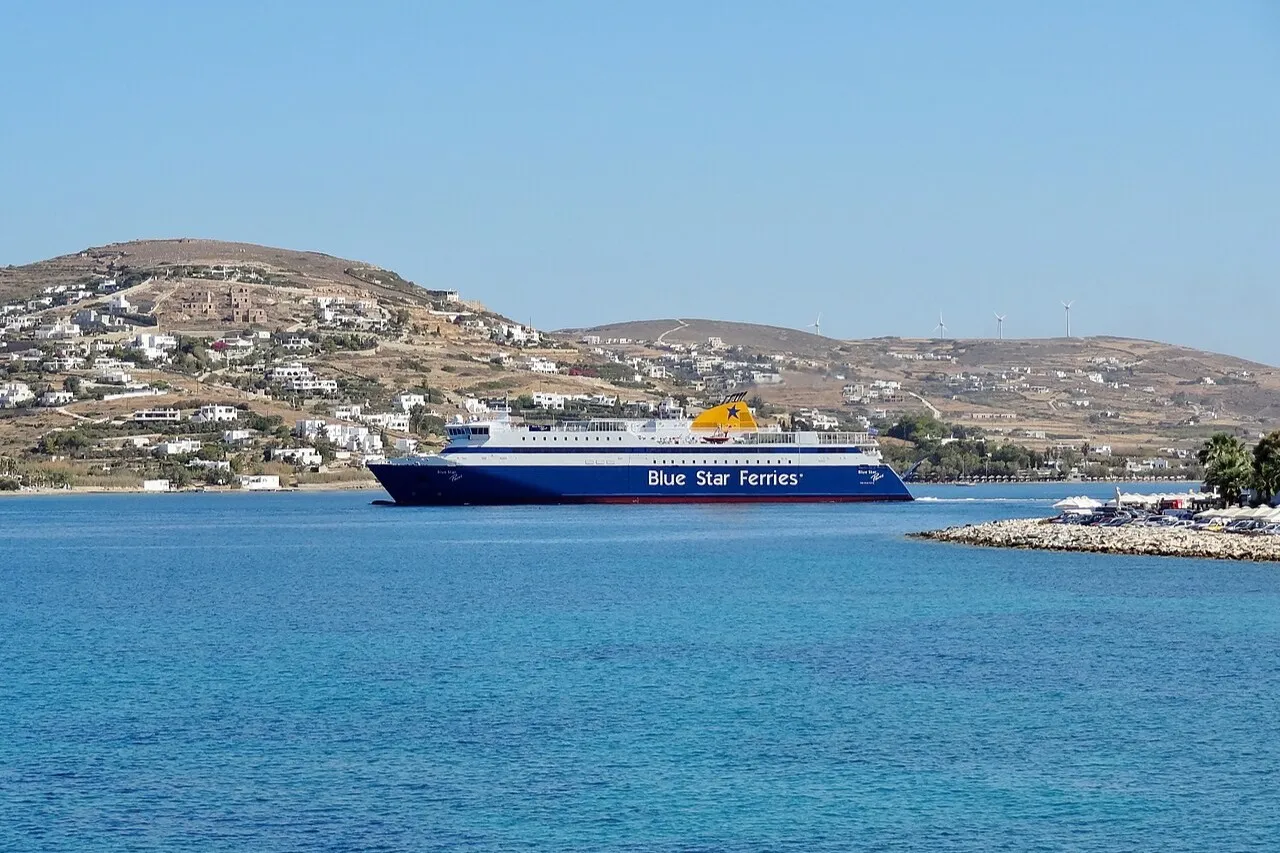
However, no matter which island you land on, there’s one wildcard that can completely upend your beautifully planned itinerary: the temperamental Aegean weather. To stay ahead of the game, it’s wise to keep an eye on the official Blue Star Ferries fleet announcement page to track live scheduling notices before you head down to the docks. Because once those high winds kick in, knowing how the local shipping lines handle disruptions becomes a matter of survival…
Facing the Meltemi: When the Aegean Swallows Your Schedule
Right, we need to have a proper, serious chat about the wildcard to end all wildcards: the Meltemi. This is a powerful, dry north wind that rips through the Cyclades every summer, usually peaking in July and August. While it sounds quite poetic, in reality, it’s a total pain in the backside for travel logistics.
When the Meltemi really gets its boots on, wind speeds can easily clock over 35 knots (about 40 mph). When that happens, the Greek port authorities do not mess around; they issue a total apanemitis (a sailing ban) for smaller high-speed catamarans. If you booked one of those sleek, flying-fish style vessels to zip from Mykonos to Milos, you might find yourself stuck on the quay with a cancelled ticket while the giant, heavy conventional car ferries—the absolute units of the sea—are the only things allowed to sail.
This is where the classic “island-hop jigsaw puzzle” completely falls apart. If your ferry is cancelled or delayed by four hours, and you have a flight to catch out of Athens International Airport that evening, you are squarely in the danger zone.
If a delayed ferry causes you to miss the first leg of your journey home, or if your flight into Athens was delayed in the first place, messing up your entire ferry connection, you need to know your rights. While ferry companies will just point at the wind and call it an act of God, airlines are held to a much tighter standard. If a flight delay into Greece threw your entire island itinerary into chaos, checking your consumer passenger rights with a specialized team like AirHelp can take the sting out of the situation. They can help you claim up to €600 (roughly $650 USD) in compensation on a “no win, no fee” basis if the airline was at fault, which goes a long way in covering your lost ferry tickets.
The Stranded Strategy: Emergency Port Stays
If the worst happens and a sailing ban leaves you completely stranded on an island for the night, do not panic, and definitely do not sleep on a plastic chair at the port. The local ticket offices will be absolute madhouses with hundreds of people trying to rebook, so skip the queue, pull out your phone, and sort your own roof over your head.
The trick here is to secure a place to sleep that is close enough to the port that you can walk back down the second the ships start moving again, but far enough away that you aren’t listening to ship horns all night. Using a reliable global aggregator like Booking.com is your best bet here because you can instantly filter for properties within a 1km radius (around 0.6 miles) of the harbor, lock in a room for around €80 (roughly $87 USD), and read real-time reviews from other travellers who have done the exact same emergency dash.
To keep yourself from getting into this mess in the first place, always check the marine forecasts on the official HNMS weather portal the morning before you travel. If you see heavy gale warnings, it’s time to start activating your backup plan before the rest of the crowds catch on.
Now that you know how to survive the wind, the ports, and the chaotic arrivals, it’s time to put all of this together into the ultimate logistical checklist so you can execute your Cycladic adventure without a single ounce of stress. Let’s look at how to map out your transit timeline perfectly from start to finish…
The Foolproof Cyclades Transit Checklist
To wrap all this up and make sure you don’t end up stranded, broke, or pulling your hair out on a Greek pier, let’s lay down a definitive, battle-tested checklist. Treat these rules as gospel when you’re mapping out your timeline.
- The Golden 4-Hour Buffer: Never, under any circumstances, book a ferry that lands in Athens less than four hours before your flight home departs. If you are travelling from the outer Cyclades, the smartest move is always to sail back to the mainland the afternoon before your international flight. It completely eliminates the anxiety of watching the horizon for a delayed boat while your plane is boarding.
- The Open-Jaw Flight Strategy: Don’t feel restricted to flying in and out of Athens. You can save massive amounts of transit backtracking by booking an “open-jaw” ticket—for example, flying into Athens, ferry-hopping through the islands, and flying straight back home out of Santorini or Mykonos airport. To stitch these complex routes together without overpaying, use a smart flight engine like Kiwi.com to mix and match different low-cost operators and find the most efficient multi-modal itinerary.
- Watch the Digital Ticket Trap: While most major ferry lines now accept QR codes on your smartphone, a few old-school local operators still require you to exchange your booking email for a physical paper boarding pass at a port-side kiosk. This small trap can cost you €1 (roughly $1.10 USD) per ticket and a precious 15 minutes in a slow-moving queue, so always read the fine print on your confirmation voucher before the ship arrives.
- Protect Your Travel Ledger: When you are dealing with independent island travel, a sudden marine strike or a severe summer gale can trigger a domino effect of cancelled connections and non-refundable hotel rooms. Before you drop a single penny on bookings, make sure you secure complete peace of mind by grabbing a robust policy through VisitorsCoverage. Having solid travel and medical protection means you can laugh off unexpected logistical hiccups instead of facing a massive out-of-pocket bill.
Final Marching Orders
Navigating the Cyclades transport hubs doesn’t have to be a nightmare. It’s all about respecting the local environment, anticipating the crowds, and refusing to leave your vital connections to absolute chance. Get your digital connectivity sorted before you land, pre-book your port transfers, choose two wheels when a car is too bulky, and always respect the power of the Aegean wind.
Now go book those tickets, grab yourself a spot on the sun deck, and enjoy the ride. The islands are waiting for you.
🇬🇷 MORE EXPERT GREECE TRAVEL & LOGISTICS GUIDES
- If you intend to take your island hopping past the central Aegean toward the quieter routes near Turkey, you will want to read up on our breakdown of remote Dodecanese logistics.
- For those planning to rent a rugged vehicle to discover the most spectacular, pristine sea caves in the region, check out our guide on Milos hidden beaches logistics.
- And when your ferry inevitably docks beneath the soaring cliffs of the most famous caldera in Greece, keep your trip stress-free by discovering why not to stay in central Santorini.