Planning an escape to Santorini but dreading the crushing tourist crowds? Ditch the chaotic caldera gridlock of Fira and Oia. This insider guide reveals the island’s best hidden, peaceful sanctuaries where you can actually relax without losing your holiday mind.
What’s in This Guide
The Santorini Quiet-Seeker’s Interactive Map
Use this interactive map to visualize the layout of the island. You can clearly see how the chaotic central hubs of Fira and Oia sit on the northern rim, while our recommended peaceful sanctuaries—Pyrgos, Megalochori, Akrotiri, and the eastern beach strips—give you plenty of breathing room down south.
💡 Map Navigation Tip: You can pinch-to-zoom on mobile or use your mouse wheel on desktop to explore the narrow mountain paths connecting Pyrgos to the coast. Click the “View larger map” link inside the window to open it directly in your Google Maps app for live GPS navigation.
Picture this. You’ve saved up your hard-earned cash for months, spent hours scrolling through flawless social media reels of whitewashed infinity pools, and finally pulled the trigger on a cave suite in the beating heart of Fira or Oia. You envision yourself lounging in a fluffy robe, sipping a crisp glass of local Assyrtiko wine as the sun dips into the Aegean Sea, wrapped in total, undisturbed Cycladic bliss.
Then, reality hits.
You step out of your room at 4:00 PM and are immediately swallowed whole by a massive, slow-moving wall of humanity. There are selfie sticks dodging your eyes, tour groups marching behind neon flags, and crowds packed tighter than a Saturday afternoon football match. Instead of hearing the gentle whisper of the sea breeze, you’re listening to a megaphone guide repeating instructions in three different languages.
Quick heads-up: Some of the links in this post are affiliate links. This means if you book a tour or secure a room through them, I earn a small commission at zero absolute extra cost to you. I only suggest things I genuinely trust, and your support keeps this site running!
The Caldera Pressure Cooker
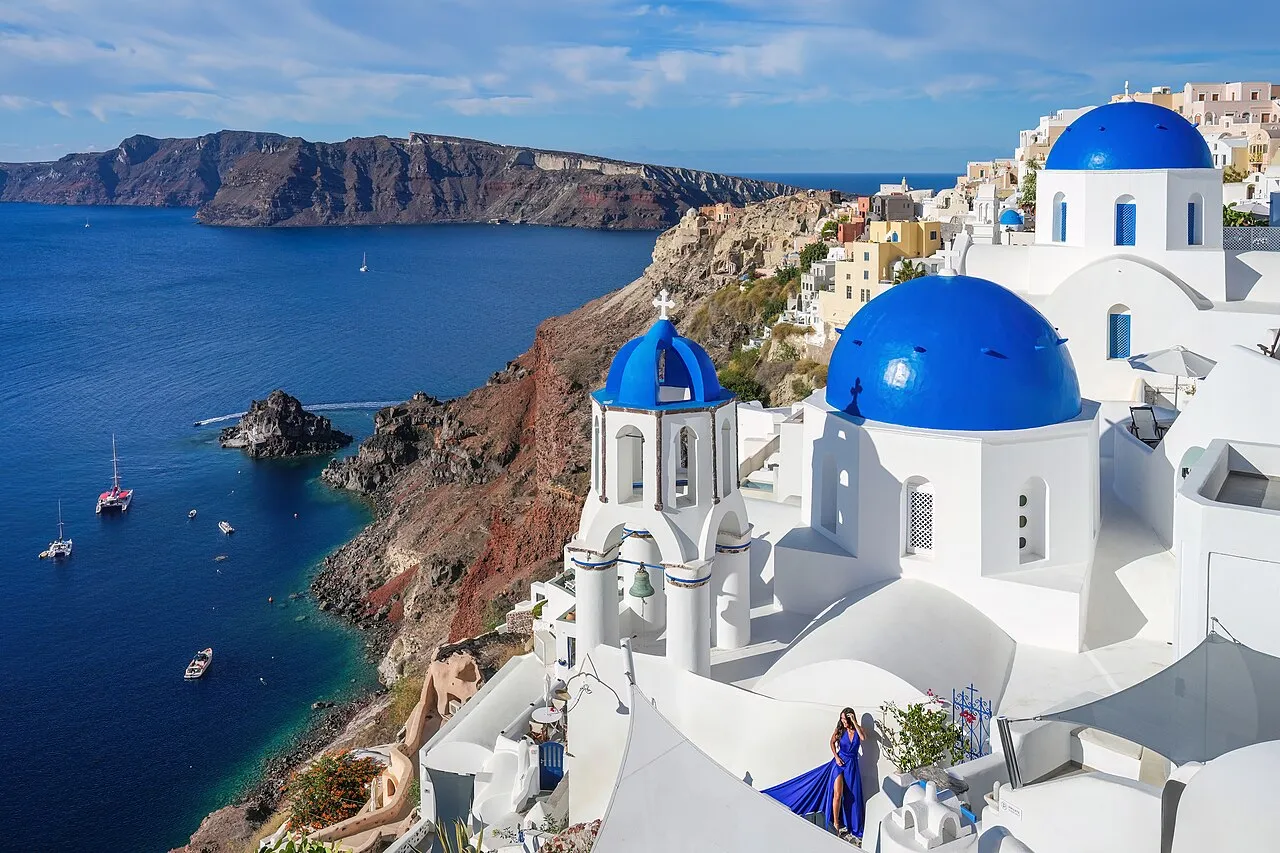
When people talk about the “center” of Santorini, they’re usually referring to the primary cliffside hubs running along the volcanic rim: Fira, Firostefani, Imerovigli, and Oia. These are the postcard pin-ups. They are also absolute logistical combat zones.
Don’t get me wrong—the authorities have actually stepped up to try and save the island from its own popularity. In 2026, tightened cruise regulations are fully active, strictly enforcing a hard cap of 8,000 cruise passengers per day, which is a massive drop from the chaotic peaks of 17,000 day-trippers we used to see a few years back. On top of that, cruise visitors arriving during the blistering high summer now have to shell out a €20 peak-season passenger fee (roughly $22 USD) just to disembark.
But here is the honest truth from someone who loves a peaceful getaway: even with fewer ships dropping anchor, those 8,000 people are all funnelling into the exact same narrow, cobblestone alleys at the exact same time. The main arteries of Fira and Oia are barely 1 meter wide (about 3 feet) in some sections. When a couple of mega-liners dump their passengers at the Old Port, the bottleneck at the Fira cable car becomes a legendary nightmare, with wait times easily stretching past an hour just to move its maximum capacity of 1,200 people per hour.
Why the “Central” Illusion Fails the Quiet-Seeker
If you value your morning sanity, waking up in central Santorini often means playing a game of defensive tourism. Many of those ultra-expensive cave hotels sit directly below public footpaths. That means while you’re enjoying a premium breakfast on your private terrace, hundreds of cruise day-trippers are literally looking down over your head, snapping photos of your breakfast, or accidentally wandering onto your plunge pool deck trying to find the perfect angle for their holiday snaps.
It completely shatters the illusion of an exclusive, romantic island escape. If you stay right in the thick of it, you aren’t paying for peace; you’re paying a premium to live inside a fishbowl.
To actually enjoy the true, legendary magic of this volcanic rock without losing your mind, you need a completely different game plan. You need to arrive smart, ditch the caldera gridlock, and set up camp where the real soul of the island still breathes. If you’re arriving by ferry or plane, the smartest move is to bypass the chaotic public bus queues entirely and have a driver waiting to whisk you straight out of the madness. Arranging a seamless ride through a reliable service like Welcome Pickups means you can watch the arrivals traffic pile up in your rearview mirror as you head toward the peaceful side of the island.
But where exactly should you go to escape the crowds, and what are you actually sacrificing if you move away from the famous rim?
The Hidden Sanctuaries: Pyrgos and Megalochori
So, if you’re pulling the plug on a Fira or Oia hotel room, where on earth do you actually stay? Let’s talk about the spots where you can actually hear yourself think, scratch beneath the surface of the real Santorini, and still get those killer sunset views minus the flying elbows.
Pyrgos: The Medieval Citadel in the Clouds
First up is Pyrgos. Situated roughly 5km (around 3 miles) south of Fira, this is the highest village on the entire island. Because it isn’t sat right on the edge of the northern caldera path, the massive cruise crowds largely bypass it.
Pyrgos is an absolute labyrinth of medieval alleys, fortified walls, and hidden churches. You can spend an entire morning wandering up to the ruins of the old Venetian castle at the top of the hill, and you’ll likely only share the path with a few lazy village cats and the odd local sweeping their doorstep.
The beauty of Pyrgos is that because it’s elevated, you get a completely panoramic, 360-degree view of the entire island. You can watch the sunset over the Aegean from a quiet taverna terrace without a single selfie stick blocking your line of sight. If you want to experience waking up to the sound of distant church bells rather than rolling suitcase wheels on stone pavement, looking up local boutique cave suites or restored historic homes on Booking.com for this area is a massive win for your sanity.
Megalochori: Wine Country and Hidden Courtyards
A little further down the road lies Megalochori, a traditional village wrapped entirely in vineyards. It looks exactly like the postcard Greece you’ve dreamed of: brilliant white houses, striking blue dome churches, and massive wooden doors opening up into secret, sun-drenched courtyards filled with pink bougainvillea.
Megalochori has a totally laid-back, slow-paced village vibe. The central square is shaded by massive trees where old boys sit for hours drinking thick Greek coffee and playing backgammon. It’s the ultimate antidote to the frenetic energy of the central strip.
The Freedom of Having Your Own Wheels
Now, there is a slight catch to staying out in these peaceful havens: the local public transport layout. Santorini’s KTEL bus system operates on a hub-and-spoke model, meaning almost every single route radiates out from the main terminal in Fira. If you rely solely on the bus, you’ll constantly find yourself standing in a hot, crowded Fira square just to transfer to another line.
To truly unlock the magic of the quieter side of the island, you need total independence. Snagging a small, nimble rental car through a platform like DiscoverCars is the absolute smartest move you can make. It gives you the freedom to escape to a secluded black-sand beach in the morning, zip up to a mountain viewpoint in the afternoon, and head back to your quiet village retreat whenever the central crowds start getting a bit too intense. A compact car will typically set you back around €35 to €50 (roughly $38 to $55 USD) per day depending on the season, which is a tiny price to pay for total holiday liberation.
But what about food, drink, and evening entertainment? Do you miss out on all the top-tier dining experiences if you choose to unpack your bags away from the famous caldera rim?
The “Caldera Tax” and Authentic Greek Feasts
One of the biggest eye-openers for first-time visitors to Santorini is just how much a view can cost you at dinner. In central Fira or Oia, a simple plate of moussaka and a mediocre cocktail can easily run you €40 to €50 (roughly $44 to $55 USD) per person, purely because you’re sitting on a terrace facing the volcano. Local travellers call this the “caldera tax.” The food in these high-traffic strips is often rushed, the tables are crammed together, and you’re subtly nudged to finish up so the restaurant can flip the table for the next wave of tourists.
When you base yourself in the traditional southern villages or head down toward the southwestern peninsula of Akrotiri, that whole cynical tourist-trap vibe completely melts away.
Akrotiri: The Untamed Southwest
Akrotiri is about as far away from the glitz and glamour of Oia as you can get on this island, sitting roughly 15km (around 9 miles) south of Fira. This area feels delightfully rugged and wild. It’s home to the famous Red Beach and the striking Akrotiri Lighthouse, where you can watch the sunset over the jagged sea cliffs with a mere fraction of the crowds found up north.
More importantly, it’s home to the Akrotiri Archaeological Site—often dubbed the “Greek Pompeii.” This is an incredibly preserved Bronze Age city that was buried in volcanic ash around 1600 BC. Because it’s fully enclosed in a massive, climate-controlled pavilion, it’s a fantastic place to escape the intense midday summer heat when temperatures regularly hit a scorching 32°C (around 90°F). To avoid standing under the blazing sun in the ticket queue outside, grab your digital smartphone entry passes ahead of time via Tiqets so you can bypass the tour buses and wander the ancient streets at your own chilled-out pace.
Real Tavernas and Hidden Vineyards
Just down the hill from the ancient ruins is the tiny Akrotiri fishing shelter. Here, you’ll find traditional, family-run fish tavernas sitting right at the water’s edge. This is where you get the real deal: freshly caught octopus drying on lines in the sun, crisp tomatokeftedes (local tomato fritters), and local white wine served in chilled copper carafes. A massive, authentic feast here will often cost less than €25 (about $27 USD) per head, and the hospitality is legendary. The owners actually have the time to chat with you, recommend their catch of the day, and pour you a complimentary shot of raki at the end of the night.
If you’re a bit of a foodie or a wine lover, staying in the south puts you right in the heart of Santorini’s ancient wine country. The volcanic soil gives the local grape varieties, like Assyrtiko, a uniquely crisp, mineral, and almost smoky flavor profile. Instead of fighting for a spot at an overpriced caldera bar, booking a boutique tasting experience through GetYourGuide lets you explore small, family-owned estates tucked away in the countryside. You get to walk through vineyard paths where the ancient vines are uniquely woven into ground baskets to protect them from the harsh Aegean winds, followed by a relaxed tasting session paired with local cheeses.
By stepping away from the commercialized center, your evenings become an actual wind-down rather than a logistical mission. But what about the famous beaches? If you aren’t staying on the cliffside grid, how do you handle beach days, and where should you go if you want a totally different, laid-back coastal vibe?
The Black Sand Escape: Flipping the Script on the East Coast
If the cliffside villages feel like a high-pressure pressure cooker, the eastern and southeastern coasts of Santorini are where the island finally lets its hair down. This is where you’ll find the massive stretches of black volcanic sand: Kamari, Perissa, and Perivolos.
If you choose to base yourself down here, you are completely flipping the script on the standard Santorini holiday. Instead of staring down into a volcanic crater from a steep staircase, you wake up, pull on your flip-flops, and walk straight onto the beach. It’s a completely flat, laid-back coastal strip where the rhythm of the day is dictated by the lapping waves rather than the arrival times of cruise ships.
Kamari vs. Perissa: The Battle of the Beaches
The two main beach towns, Kamari and Perissa, sit right next to each other, but they are physically cut off by a towering, jagged chunk of rock called Mesa Vouno. This mountain shoots up 369 meters (about 1,210 feet) straight out of the sea.
Kamari is a bit more developed, featuring a polished, pedestrianized beachfront promenade lined with excellent open-air restaurants, casual bars, and open-air cinemas. Perissa and its neighboring strip, Perivolos, stretch out into a seemingly endless expanse of dark sand and pebbles, offering a distinctly bohemian, backpacker-friendly energy with beanbag beach bars and cozy seafood joints.
The absolute beauty of staying on this side of the island is the value for money. Because you aren’t paying that heavy “caldera tax” on your room, your holiday budget stretches twice as far. You can lock in a fantastic beachfront hotel with a massive swimming pool for a fraction of what a tiny windowless cave room costs up north. If you want to scout out the absolute best rates and compare budget options side-by-side, hopping onto Agoda will show you just how much cash you can save by sleeping near the sand.
The Ultimate Beach-Hopping Shortcut
Now, if you’re staying in Perissa and want to head over to Kamari for dinner, driving a rental car means you have to journey all the way inland and skirt all the way around the base of the mountain—a tedious 20-minute detour. But local boat captains have a much better solution.
During the high summer season, a traditional wooden caique boat operates as a local water taxi, making the short 15-minute hop straight across the water between Kamari and Perissa. It sails every 40 minutes throughout the day, costing just a few euros. It’s a brilliant, breezy little journey that gives you incredible views of the sheer cliff faces of Mesa Vouno, completely bypassing the hot island roads.
To navigate these flat coastal resort roads and zip between the beach bars effortlessly, a bulky car can actually be a bit of a hindrance when it comes to parking. The savviest quiet-seekers skip the car completely on beach days and hire a nimble scooter or a rugged quad bike. Using a dedicated platform like BikesBooking.com lets you secure a reliable set of two wheels online before you land, meaning you can pull up right next to your beach lounger without spending 15 minutes hunting for a tight parking space in the dusty back alleys.
Sunsets Without the Scrimmage: How to Have It All
Let’s tackle the ultimate dilemma. If you choose to sleep in a peaceful southern village like Megalochori, or drop your bags at a beach hotel in Perissa, aren’t you missing out on the one thing everyone comes to Santorini to see? The legendary, world-famous Caldera sunset?
Absolutely not. In fact, by staying outside the central tourist bubble, you’re actually set up to experience the famous views in a much more civilised, stress-free way. Here is exactly how you beat the system and get those postcard-perfect moments without having to fight through a wall of selfie sticks.
The Secret of the Morning Hike
If you want to experience the dramatic cliffside architecture of Fira, Firostefani, Imerovigli, and Oia without the sensory overload, you simply have to change your body clock. Set your alarm early and head to the Caldera path at 7:00 AM.
The famous walking trail connecting Fira to Oia is a rugged 10km hike (around 6 miles) along the edge of the volcanic crater[cite: 1]. If you tackle it first thing in the morning, the air is beautifully crisp, the morning sun hits the white buildings like a dream, and the paths are completely empty. You can wander through the narrow alleys of Oia, snap your photos without a single stranger in the frame, and grab a quiet Freddo Espresso at a local café before the first tour buses even arrive at the parking lots. By 11:00 AM, when the heat starts to rise and the cruise crowds begin to pour in, you’re already heading back south to your quiet pool loungers.
Get Off the Cliffs and Onto the Water
The honest truth about the Oia sunset is that watching it from the castle ruins involves standing shoulder-to-shoulder with thousands of people for two hours beforehand just to lock down a spot. It’s exhausting, hot, and completely kills the romance.
A far better alternative is to fork out a bit of your saved accommodation budget on an afternoon catamaran cruise. Booking a small-group sailing excursion through a trusted marketplace like GetYourGuide or Viator completely transforms the experience. These tours typically depart from the southern port of Vlychada, cruise past the Red and White beaches, stop for a swim in the volcanic hot springs, and serve up a brilliant open-air BBQ dinner with local wine right on the deck.
When the sun finally starts to touch the horizon, the captain drops anchor right below Oia. You get to watch the golden light reflect off the whitewashed cliffside villages from the absolute comfort of a spacious deck, sipping a cold drink with plenty of breathing room. A premium cruise will usually run you between €100 and €150 (roughly $110 to $165 USD) per person, but it is worth every single penny to escape the absolute madness on the cliffs.
Use the Insider Data Strategy
If you do want to head into Fira for an evening meal or a stroll, don’t just wing it. Play the system like a pro by checking the official data before you leave your hotel.
The smart move is to bookmark the Official Municipal Port Fund of Thira live cruise arrival schedule. This public tracker shows you exactly how many ships are scheduled to anchor each day, along with their precise passenger capacities. If you see a day on the calendar where three or four mega-liners are dropping off thousands of day-trippers simultaneously, make that your designated beach or vineyard day down south. Wait for an evening where the port schedule is completely clear, and you’ll find Fira a hundred times more pleasant to explore.
The Quiet-Seeker’s Verdict
Santorini is an undeniably beautiful destination, but staying right in the thick of the central Caldera hubs can quickly leave you feeling burnt out and ripped off. By basing yourself in historic inland villages like Pyrgos, or along the expansive black sands of the east coast, you unlock a side of the island that most tourists completely miss. You get the authentic hospitality, the reasonable prices, and the serene space to actually unwind—all while keeping the spectacular views strictly on your own terms.
🏝️ More Essential Greek Island Guides
- Mastering remote Dodecanese ferry logistics: How to outsmart the Meltemi winds and plan a seamless escape to the outer edges of the Aegean.
- The logistics of reaching the hidden beaches of Milos: Everything you need to know about island-hopping safely through the Cyclades.