Ditch the massive tourist crowds and discover the wild side of northern France. This ultimate Opal Coast road trip guide steers you down winding tarmac to secret sandy coves, historic sea forts, and dramatic clifftops hidden right under everyone’s noses.
What’s Inside This Guide
Opal Coast Road Trip Master Map
Here is your interactive route overview. Use this map to track your journey down the spectacular D940 coastal highway, running all the way from the sheer northern chalk cliffs down to the massive river estuary sand flats in the south. You can pan, pinch to zoom, and explore the exact coastal curves mentioned in this guide.
Driver’s Navigation Tip:
Bookmark this page or save the map location directly to your phone before setting off. Mobile signals can get a bit patchy when you descend into deep cliff cavities like Cran d’Escalles or slip behind the massive dune systems of Wissant!
1. The Coastal Gateway & The Cliffside Chasm
Ever stood on the cliffs of Dover, looked out across the English Channel, and wondered what’s actually on the other side besides cheap supermarket wine warehouses? Just a short hop across the water lies the Côte d’Opale (the Opal Coast), a jaw-dropping 120-kilometre stretch (around 75 miles) of wild chalk cliffs, rolling green hills, and massive sandy shorelines. But if you just stick to the main holiday hotspots, you’re missing out on the absolute best bits. We’re talking hidden sandy coves tucked neatly underneath towering white cliffs where the frantic tourist crowds completely vanish.
Quick heads-up: Some of the links in this post are affiliate links. This means if you book a tour or secure a room through them, I earn a small commission at zero absolute extra cost to you. I only suggest things I genuinely trust, and your support keeps this site running!
To tackle this properly, you need your own set of wheels to navigate the D940—the legendary coastal back road that winds all the way from Calais down to the old fishing ports. If you are flying into Lille or Paris to kick off this adventure instead of bringing your own car over on the ferry, do yourself a massive favour and search for a ride using DiscoverCars. It lets you compare local fleets instantly so you don’t get stung by extortionate walk-up rates at the airport desk. Another brilliant shout for sniffing out low-cost aggregators on these coastal routes is Economybookings.com, which is perfect for securing a nimble hatchback that can easily navigate tight seaside village lanes.
Before you even turn the ignition key, let’s sort your digital lifeline. Getting caught abroad with zero data or getting hit with surprise roaming charges is a proper buzzkill. Toss a cheap travel eSIM onto your phone via Airalo or Saily before you cross the channel so you can load live sat-nav maps the literal second you arrive. And while you’re dialing in your tech settings, make sure you activate NordVPN before logging into any open, public Wi-Fi networks at the port terminals or local French bistros. The last thing you want is someone skimming your banking details while you’re simply trying to look up the best place to grab a bowl of fresh mussels.
Our first true hidden gem on this route is Cran d’Escalles. Tucked away at the absolute foot of the mighty Cap Blanc-Nez cliff face, this tiny sand-and-pebble cove is a dramatic slice of paradise. You won’t see it from the road; you have to pull into the small cliffside parking area and follow a steep, rustic path that slices straight down through a natural opening in the chalk rock. When summer temperatures hit a blistering 28°C (about 82°F), descending into this sheltered, breezy cove feels absolutely incredible.
The golden rule here? You absolutely must check the live tide timetables on the official Pas-de-Calais Tourisme site before stepping foot on the sand. At high tide, the sea crashes directly against the sheer rock walls, completely swallowing the beach. But if you time it right at low tide, the ocean retreats to reveal an unusually vast expanse of smooth, fine sand where you can walk for miles underneath the towering white cliffs.
Once you’ve dusted the salt and sand off your boots at Cran d’Escalles, it’s time to hop back onto the winding tarmac of the D940 and head south towards a historic, windswept bay where Roman emperors once plotted their global conquests…
2. The Two Capes and the Secret Dunes of Wissant
As you rumble along the D940 south from Cap Blanc-Nez, the landscape starts to shift into wide, sweeping pastures that run right up to the edge of the sheer sea drop. Pretty soon, you’ll drop down into Wissant, a charming little coastal village nestled perfectly in the massive horseshoe bay between the two great headlands. Now, the main town beach in Wissant is absolutely stunning, but because it’s a world-class windsurfing hotspot, it can get packed out with campervans and families during the sunny summer weekends. If you want a bit more breathing room and a genuine sense of isolation, you need to slip away into the protected dune systems just outside the village limits.
The secret here is targeting the northern stretch towards Tardinghen or heading south into the Dunes d’Ambleteuse. Hidden deep within these massive, grass-covered sand hills lies a sprawling network of old World War II concrete bunkers—shattered remnants of the Atlantic Wall that are slowly being swallowed by the shifting sands. It feels like an eerie, beautiful open-air museum where you can sunbathe in complete privacy right next to twentieth-century history.
If you’re planning to base yourself around this dramatic sweeping bay for a night or two to watch the spectacular sunsets over the English Channel, there are some brilliant converted traditional stone cottages and boutique seaside B&Bs tucked away in the lanes. I always use Booking.com to snag an authentic room with a proper sea view before the weekend rush clears them out. If you want a slightly different flavor or want to compare local guesthouse prices to make sure you’re getting the absolute best rate, pop onto Agoda to see if they’re running any flash deals for the area.
Logistical Pro-Tip:
One major logistical headache along this wild part of the coast is handling your gear if you’ve checked out of your accommodation early but still want to spend a full afternoon hiking the cliff paths or lounging on the sand. Leaving all your expensive digital cameras, drone kits, or suitcases sitting in plain sight in the boot of a rental car parked in a remote coastal layby is just asking for trouble. To avoid spending your whole afternoon stressing about break-ins, use Radical Storage to drop your heavy bags off safely at a verified local shop or partner hub for a few euros—usually setting you back around €6 (roughly $6.50 USD) per bag for the day—so you can wander completely hands-free.
When you’re trekking through these exposed dunes, the breeze coming off the water can be deceptively cold, even when the sun is out. Expect standard summer afternoon temperatures around 21°C (about 70°F), but that coastal wind will make it feel a lot brisker, so make sure you pack a decent windbreaker. For the ultimate view of the entire coastline, stretch your legs on the 6km hiking trail (roughly 3.7 miles) that snakes along the clifftops toward Cap Gris-Nez. You can grab free, highly detailed trail maps and check local conservation notices directly on the official Grand Site des Deux Caps web platform before setting off.
Once you reach the jagged, grey rocks of Cap Gris-Nez, the English Channel narrows to its absolute closest point to British soil—just 34km (around 21 miles) across the open water. On a crystal-clear afternoon, the white cliffs of Dover look close enough to touch. But we aren’t stopping at the lighthouse; our road trip is about to take us further south into a sprawling, pine-fringed river estuary where a completely different kind of hidden beach awaits…
3. The Pine-Fringed Wilderness & The Seal Sanctuaries
If you keep rolling south past the lovely, pastel-coloured Victorian seafront of Wimereux, the coastline throws a proper curveball at you. The dramatic white chalk cliffs completely disappear, replaced by a sprawling landscape of wild, wind-sculpted sand dunes and dense pine forests. Welcome to the Baie de Canche Nature Reserve, a stunning river estuary tucked right next to the high-society holiday town of Le Touquet. Most tourists head straight for the main town promenade to eat overpriced crepes, completely oblivious to the fact that just a few minutes north lies an absolute haven of wilderness and completely deserted sandbanks.
This is where the fresh river water meets the crashing tides of the English Channel, creating a shifting landscape of salt marshes and massive, clean sand spits. But here is the catch: trying to navigate this pristine area with a chunky rental car is a total non-starter. Motorized vehicles are strictly banned from the reserve’s interior tracks, and trying to park anywhere near the main trailheads during the peak summer months will set you back a painful €12 (roughly $13 USD) in local parking fees.
The Nimble Alternative:
To bypass this headache entirely, leave your car at your accommodation and rent a couple of e-bikes or a nimble moped through BikesBooking.com. It is by far the best way to zip down the narrow, pine-scented tracks, feeling the cool sea breeze on your face without breaking a sweat. It gives you total freedom to jump between hidden trail access points at your own pace.
Once you enter the reserve, follow the gorgeous 5km wooden boardwalk loop (about 3.1 miles) that cuts straight through the heart of the maritime pine forest. When the summer sun is beating down at a warm 24°C (around 75°F), the shade of the pine trees smells absolutely incredible—like a Mediterranean holiday dropped right into northern France. The boardwalk eventually spits you out onto an elevated viewing platform overlooking the entire estuary.
If you bring a decent pair of binoculars, you are in for a massive treat. The Baie de Canche is home to a permanent, resident colony of wild harbor and grey seals. At low tide, you can spot them lazily basking on the exposed sandbanks out in the middle of the river channel like giant sausages soaking up the sun.
Whatever you do, don’t try to wade out across the mudflats on your own to get a closer look; the incoming tide here moves faster than a galloping horse and can trap you in seconds. If you want to get out onto the water safely, you can book an expert-led sea kayak excursion or a local maritime rib boat tour. Check out the current options on GetYourGuide to secure a spot with a certified local guide who knows exactly how to navigate the estuary currents without disturbing the wildlife.
Before you pack your bags and head out into the elements, make sure you double-check the live trail statuses and bird-nesting closures on the official Eden 62 website, which is the state-run conservation body managing the entire ecosystem.
Once you’ve had your fill of seal-spotting and pine forests, it’s time to head further south toward the final leg of our coastal road trip—a historic fortified town where ancient stone ramparts look down upon a vast, wild bay that completely transforms with the moon’s pull…
4. The Inverted Boats of Équihen and the Vauban Sea Fort
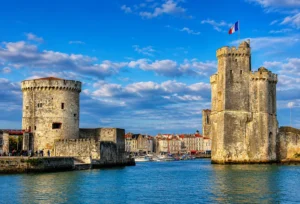
Steering your car further down the coast, you’ll hit Ambleteuse, a striking little seaside town where the wild Slack river breaks out into the sea. The showstopper here is Fort Mahon, a massive stone sea fort built all the way back in the seventeenth century by Vauban, Louis XIV’s legendary military engineer. At high tide, the ocean completely surrounds the fort, forcing it to stand defiant against the crashing waves like a stone battleship. When the tide pulls back, it exposes a rugged, rock-strewn beach that is an absolute goldmine for tracking down hidden rock pools filled with tiny crabs and sea anemones.
If you want to dive deep into the crazy military history of this coast—which has been the front line of everything from Roman invasions to Napoleonic camps—it pays to get a local guide to show you the hidden gun emplacements tucked into the hillsides. You can find some fantastic, highly specific regional walking tours and cultural experiences hosted by local experts on Viator. It saves you from just staring at a pile of old stones and actually gives you the full, unvarnished story of what went down here.
The Coastal History Spotlight:
Just a short 15km drive (around 9 miles) further south past the bustling fishing port of Boulogne lies Équihen-Plage, a wild, cliffside village with a genuinely unique history. Back in the nineteenth and early twentieth centuries, this place was an incredibly poor fishing community. When old wooden fishing boats became too damaged to handle the rough channel waves, the local families didn’t burn them. Instead, they dragged them up onto the clifftops, flipped them completely upside down, coated them in thick black tar to seal out the brutal coastal rain, and lived inside them. They were called quilles en l’air (keels in the air). While almost all the original boat-houses were flattened during wartime bombing raids, the village has lovingly reconstructed several of them on the clifftops.
If you are pairing this epic French road trip with a flight into a regional hub like Lille or Paris before picking up your hire car, you need to keep a sharp eye on European airspace logistics. Mid-summer travel can get incredibly chaotic, and if an unexpected air traffic control strike or sudden cancellation completely wrecks your itinerary, don’t just sit on the airport floor sweating and losing your mind. Use AirHelp to instantly check your passenger rights and see if you are legally entitled to a cash payout—sometimes totaling up to €600 (roughly $650 USD) per person on a stress-free, “no win, no fee” basis.
Of course, being right on the edge of the English Channel means the maritime weather can turn on a sixpence. If the blue skies suddenly vanish and temperatures drop down to a chilly 16°C (about 61°F), don’t pack up and head home. Instead, pull into Boulogne-sur-Mer and visit Nausicaá, which is officially the largest public aquarium in the whole of Europe. To avoid wasting your precious holiday hours standing in a miserable, rain-soaked queue outside the main gates with hundreds of school trips, log onto Tiqets to buy an instant, digital fast-track pass straight to your smartphone so you can skip the lines entirely.
Before you head inside to see the massive manta rays, stop by the official Boulogne-sur-Mer Tourism Office site to download a free, highly detailed map of the old town’s medieval fortified walls. Walking the top of those ancient stone ramparts gives you a spectacular, panoramic view over the harbor and the secret beaches below.
With the historic ramparts behind us, it’s time to head toward the grand finale of our coastal journey—a majestic, elegant resort town bordered by massive, empty sand flats that feel like the literal edge of the earth…
5. The Grand Finale at the Edge of the Earth
Our final tyre tracks bring us rolling into Le Touquet-Paris-Plage, a place that feels less like a rugged northern fishing outpost and more like a posh upscale neighborhood dropped right onto the shoreline. Back in the roaring twenties, this was the ultimate playground for wealthy Parisians and British high society who wanted to gamble in the casinos and show off their custom-built sports cars. The town is still absolutely packed with stunning Anglo-Norman timber villas tucked away quietly beneath a dense canopy of pine trees. But look past the boutique shopfronts and the chic cafes, because the real showstopper here is the mind-boggling scale of the beach itself.
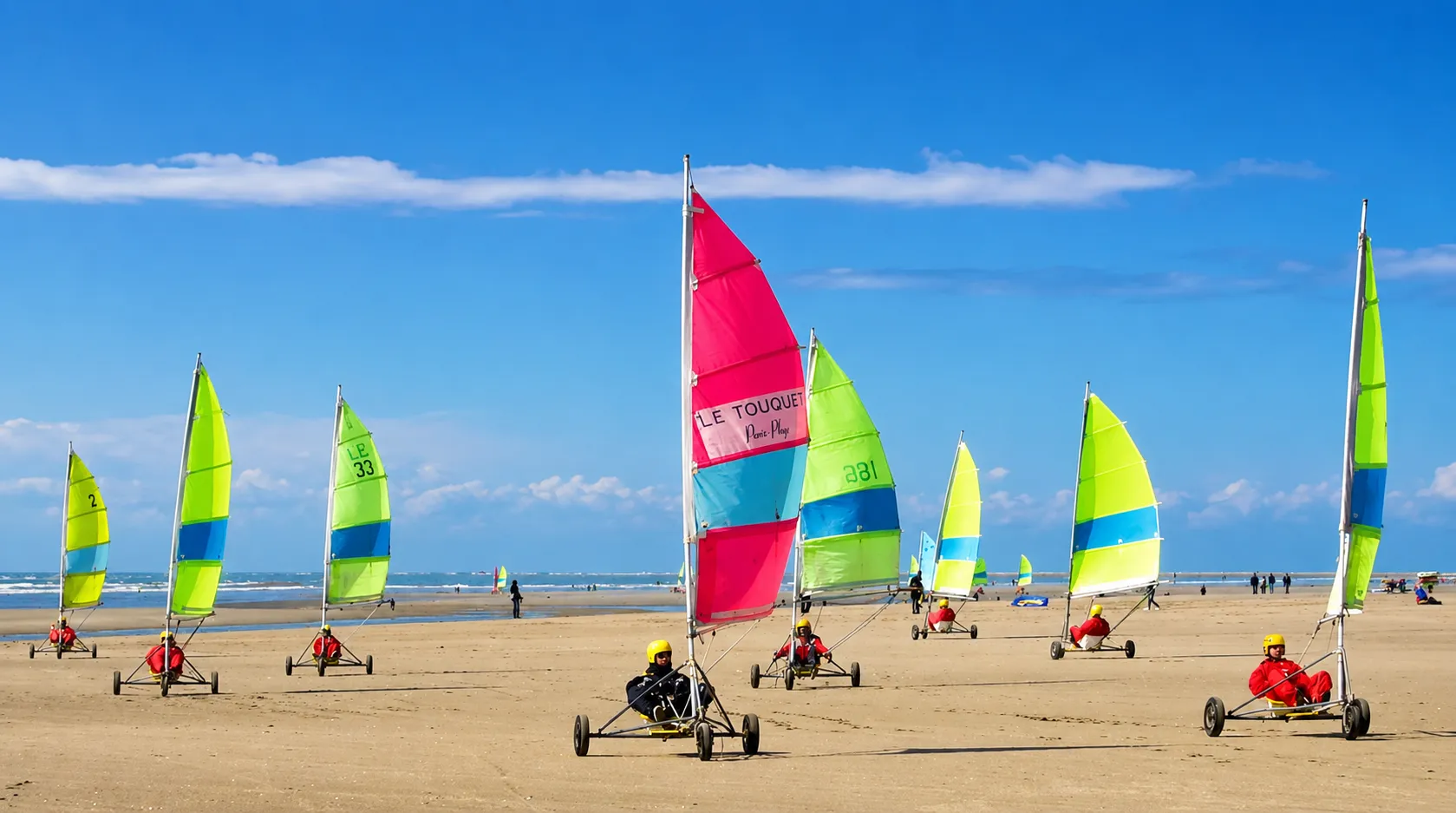
At the main town front, the fine golden sand stretches out as far as the eye can see. When the tide retreats, the water line drops back nearly 1km (about 0.6 miles) from the promenade, leaving behind a massive, glistening desert of damp sand pools and empty shores. If you want to escape the main family sunbathing zones, just wander north toward the Baie de Canche dunes or head a further 15km (around 9 miles) south down the coast to the wide-open sand flats of Berck-sur-Mer. Out here, the beaches are so huge that they are regularly used for sand yachting—crazy three-wheeled karts with massive windsurf sails that blast across the hard sand at speeds topping 50 km/h (around 31 mph).
Where to Stay:
If you are tackling this coastal road trip as a group of friends, a family holiday, or a big anniversary getaway, don’t compromise by cramming everyone into separate, sterile hotel rooms. The absolute best way to finish this journey in style is by renting an authentic, traditional forest villa where you can light up a barbecue and share a few beers on a private deck. I highly recommend browsing Vrbo to lock down a proper character property hidden away in the Le Touquet pine woods, which gives you loads of space and a fully equipped kitchen without the eye-watering premium rates of local luxury hotels.
Before you wrap up your bags and hit the road for the final stretch home, let’s talk about basic common sense. While northern France feels incredibly safe and familiar, unexpected medical mishaps, a nasty spill on a rented e-bike, or a sudden emergency can quickly derail your holiday finances. Before you even set foot on the ferry or plane, take two minutes to sort out your personal safety net by visiting VisitorsCoverage to secure a comprehensive travel insurance policy. It gives you complete peace of mind that you won’t be left holding a massive bill if you need an unexpected trip to a French clinic or local pharmacy.
To make sure you don’t fall foul of the town’s fiercely enforced parking regulations—where a simple mistake can land you a painful €35 fine (roughly $38 USD)—make sure to bookmark the official Le Touquet-Paris-Plage Tourisme website. It lets you download live maps showing exactly where the free parking zones are located just outside the central shopping grid.
Finally, if your return journey involves connecting flights out of Lille, Brussels, or Paris, keep a backup plan in your pocket. If a sudden airline logistical meltdown leaves you stranded at the departure gate for hours on end, don’t just accept a measly airport sandwich voucher. Fire up Compensair on your phone to let their legal team automatically fight the airlines for your statutory compensation while you sit back and relax.
The Opal Coast isn’t just a place you drive through to get somewhere else—it is a wild, historic, and stunningly beautiful world of its own, just waiting for you to pull off the main highway and discover its secrets.
More Unfiltered French Road Trip Inspiration
If you are looking to keep the coastal vibes rolling and extend your adventure beyond the Opal Coast, we have got you covered. Skip the usual textbook tourist traps and dive into our hyper-specific, no-nonsense logistical guides to some of France’s absolute best coastal escapes:
- Normandy’s Most Historic Port: Map out your drive through historic timber-framed maritime streets with our raw, practical Honfleur Travel Guide.
- Brittany’s Wild Island Escape: Master the complex ferry routes, car regulations, and rugged coastal tracks using our step-by-step Belle-Île-en-Mer Logistics Guide.
- The Hidden Channel Archipelago: Discover how to explore Europe’s largest island grouping at low tide with our completely transparent Chausey Islands Logistics Guide.