Planning an epic adventure to the Cyclades? Discover how to safely navigate the rugged volcanic terrain, steep rope ladders, and hidden sea channels of Milos. This complete logistics guide ensures you unlock the island’s most spectacular secret coves entirely unhindered.
The Logistics of Reaching the Hidden Beaches of Milos: Complete Navigation Directory
Jump straight to a specific section:
- 1. The Milos Transportation Puzzle: Getting There & Wheel Selection
- 2. The Rope-Ladder Gauntlet (Tsigrado) & The Ultimate Pirate Hideout (Kleftiko)
- 3. Walking on the Moon (Sarakiniko) & The Cloaked Sea Channel (Papafragas)
- 4. The Industrial Ghost Town (Thiorichia) & The Secret Passages of Fyriplaka
- 5. The Ultimate Milos Adventure Survival Checklist
🗺️ Hidden Beaches of Milos: Route & Location Directory
Use this interactive map to visualize your driving routes, identify unpaved off-road sections, and track down the cliffside parking zones for all the beaches covered in this guide.
1. The Milos Transportation Puzzle: Getting There & Wheel Selection
Right, let’s be completely honest for a second. We’ve all seen the jaw-dropping photos on social media of moon-like white volcanic rocks and completely empty turquoise coves. It looks like an absolute paradise. But if you think you can just hop off a ferry with nothing but a pair of flimsy flip-flops and stroll onto the legendary hidden beaches of Milos, you are in for a proper shock. This island is a rugged volcanic playground packed with over 75 distinct beaches, and the absolute best ones don’t just hand themselves over to lazy travellers. They require some serious logistical plotting, a bit of grit, and a solid understanding of how to navigate terrain that would make a mountain goat double-check its footing.
Quick heads-up: Some of the links in this post are affiliate links. This means if you book a tour or secure a room through them, I earn a small commission at zero absolute extra cost to you. I only suggest things I genuinely trust, and your support keeps this site running!
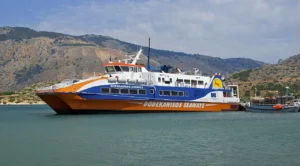
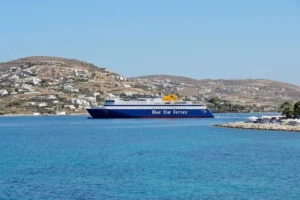
First things first, you’ve got to actually get your boots on the ground here. If you’re coming from Athens, you’ve essentially got two choices: catch a short internal flight to the tiny Milos Airport or take a ferry from Piraeus Port. To view official vessel timetables, monitor seasonal schedule changes, and book your tickets securely without third-party markups, check out the live portal run by the official Piraeus Port Authority. The ferry ride can take anywhere from a breezy 3 hours on a high-speed catamaran to a long, lazy 7 hours on a conventional ship. Tickets usually set you back between €35 and €120 (roughly $37 to $128 USD) per person each way, depending entirely on how fast you want to cut across the Aegean Sea.
Once you arrive at Adamas, the main port town, the real transportation puzzle begins. Milos is deceptively compact, covering about 160 square kilometers (around 62 square miles), meaning no two points are more than a short 45-minute drive apart. But do not let that fool you into thinking you can survive on public transport. While the local bus network is decent for popping between main hubs like Adamas, Plaka, and the seaside village of Pollonia for around €2 (about $2.15 USD) a ticket, it completely abandons you when it comes to the remote coastal hideaways. If you limit yourself to the bus routes, you’ll be stuck on the same three overcrowded main beaches with everyone else, completely missing the magic.
To truly unlock the island’s secrets, you absolutely need your own set of wheels. If you are visiting during the peak summer rush between July and August, booking your ride months in advance via DiscoverCars is a total lifesaver. Local fleets run out fast, and turning up at a desk without a reservation means you’ll either be stranded or fleeced for upwards of €80 (roughly $85 USD) a day for a basic compact car.
The Unpaved Insurance Trap:
Standard car hire contracts strictly forbid you from taking two-wheel-drive vehicles onto unpaved tracks. The western half of Milos—everything past the sweeping sands of Achivadolimni Beach—is completely uninhabited, wild, and barren. The roads out there aren’t paved; they are brutal dirt tracks littered with sharp volcanic rocks and deep potholes. If you pop a tyre or wreck the undercarriage out there, your insurance is completely void and you’ll be facing a massive repair bill.
If your heart is set on exploring the untamed west coast, you have two real choices. You can either hunt for a dedicated 4×4 vehicle, or you can use BikesBooking to secure a rugged quad bike (ATV) or a heavy-duty e-bike. Quad bikes are incredibly popular on the island for a reason; they handle the rough terrain beautifully, make parking an absolute non-issue, and let you feel the warm Mediterranean breeze as you ride. Just make sure you opt for a model with at least a 300cc engine, or you’ll find yourself crawling up the steep island hills at a pathetic snail’s pace while traffic backs up behind you.
Now that you know how to secure your wheels and survive the roads, we need to talk about the physical hurdles waiting for you at the actual cliff edges—starting with a notorious beach that requires you to literally climb down a precariously dangling rope ladder just to touch the sand.
2. The Rope-Ladder Gauntlet (Tsigrado) & The Ultimate Pirate Hideout (Kleftiko)
Right, let’s talk about Tsigrado. If you’ve spent more than five minutes scrolling through Milos travel photos, you’ve definitely seen this place. It’s a tiny, breathtaking cove enclosed by sheer, vertical red cliffs. But getting down to it feels less like a relaxing holiday and more like an audition for an action film.
⚠️ Physical Safety Warning:
Once you park your ride in the dirt lot, you’ll walk over to the cliff edge and find a warning sign that basically tells you you’re proceeding entirely at your own risk. To reach the actual sand, you have to squeeze your body through a ridiculously narrow rock crevice, hang onto a frayed yellow rope, and back your way down a wooden ladder that is precariously lashed to the cliff face. And just when you think you’ve made it, there’s a second vertical ladder waiting for you.
If you are sketchy with heights, a bit clumsy, or trying to haul a massive cooler box and a giant inflatable flamingo, do yourself a massive favour and skip this one. It’s a recipe for a twisted ankle. When summer temperatures hit a blistering 32°C (around 90°F), sweating your way back up that rope with sand in your shoes is proper hard work. My advice? Arrive before 9:00 AM. Not only will you secure a rare parking spot, but you’ll also avoid the absolute comedy show of fifty tourists queuing at the top of the cliff, awkwardly debating whether they have the upper body strength to climb down.
If Tsigrado sounds like a bit too much of a physical headache, the western coast holds the crown jewel of the island: Kleftiko. This isn’t actually a traditional beach with a wide stretch of sand; it’s a mind-boggling playground of towering white volcanic rock arches, hidden caves, and water so ridiculously clear it looks like boats are literally hovering in mid-air. It used to be an old pirate hideout where ships would duck away from storms and ambush passing merchants.
Now, you can technically reach Kleftiko by land, but unless you’re an experienced hiker with a death wish, I strongly advise against it. The overland route requires driving a 4×4 deep into the rugged, unpaved western wilderness, followed by a brutal 5km hike (about 3 miles) each way through completely exposed, snake-prone brush with zero shade.
The smart, stress-free way to experience Kleftiko is from the comfort of a boat deck. Dozens of sailing trips leave daily from Adamas port or the southern beach of Provatas. If you want a top-tier day out on the water, you can browse full-day catamaran cruises on GetYourGuide. These tours usually set you back around €100 to €150 (roughly $107 to $160 USD) per person, but they include an open bar, a proper Greek lunch cooked right on board, and snorkeling gear so you can swim straight through the volcanic rock tunnels.
If you prefer smaller groups or want a high-speed rib boat that can actually squeeze right inside the deeper sea caves, it’s well worth checking out the options on Viator to lock in a semi-private excursion. Whichever boat you choose, seeing those massive white monoliths rise out of the deep blue Aegean Sea is something you won’t forget in a hurry.
But what if you want that dramatic, surreal white-rock vibe without having to step foot on a boat or risk your life on a rope ladder? Next up, we are heading to a place that looks less like Greece and completely like the surface of the moon.
3. Walking on the Moon (Sarakiniko) & The Cloaked Sea Channel (Papafragas)
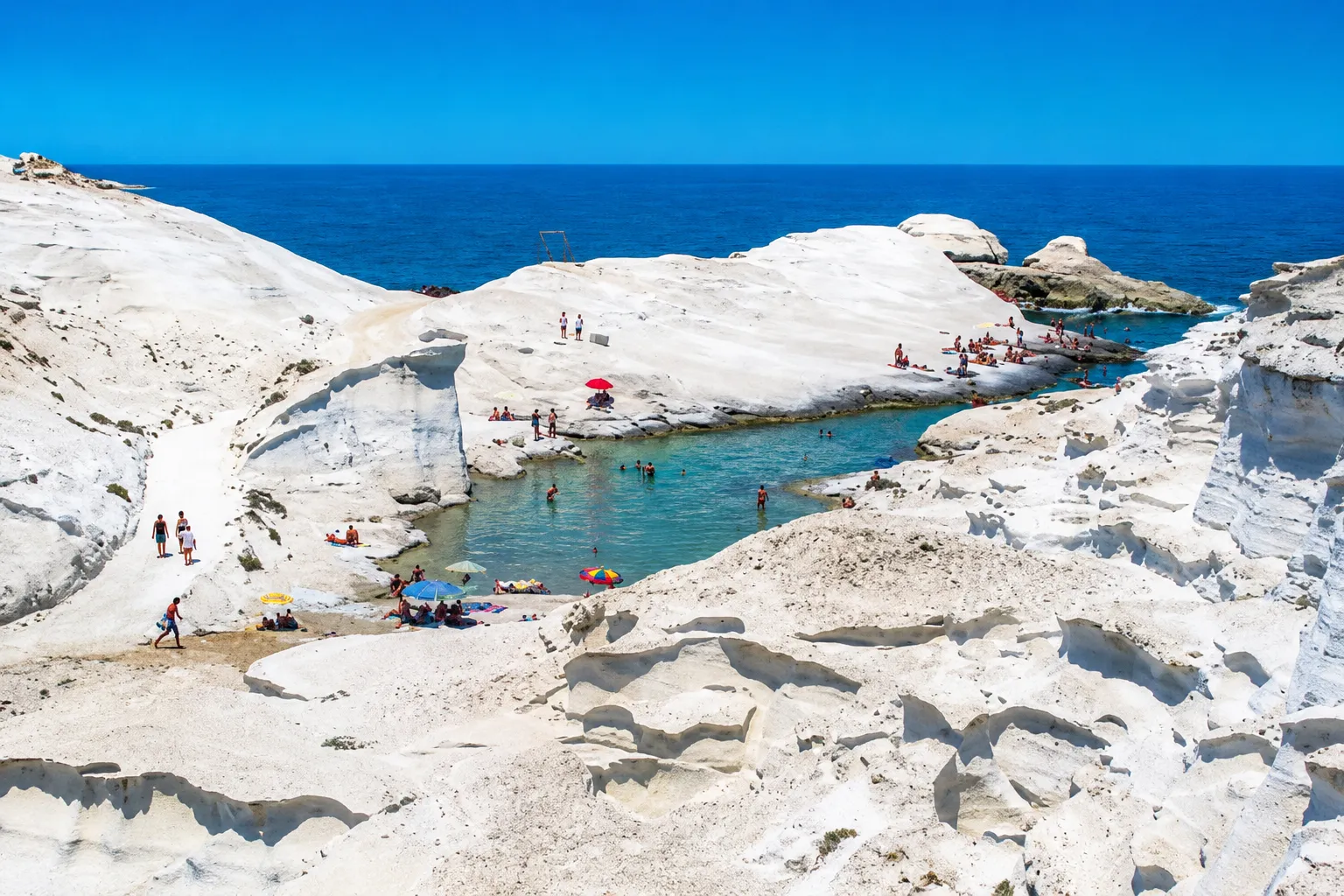
If you’re ready to trade the red cliffs of Tsigrado for something completely surreal, Sarakiniko is where your mind will be properly blown. This isn’t a beach in the traditional sense—there is almost no sand here. Instead, you are stepping onto massive, bone-white volcanic pumice rock formations that have been sculpted by centuries of wind and waves into smooth, undulating waves. It looks exactly like a film set for a sci-fi movie based on the lunar surface.
Logistically, Sarakiniko is actually one of the easiest hidden spots to reach by road, located just 4km (around 2.5 miles) north of Adamas. The entire road is fully paved, meaning you don’t need a specialized 4×4 to get here; a budget compact car sourced from Economybookings.com will handle the drive absolutely fine. There is a sizeable dirt parking lot at the end of the road, and entering the site is completely free.
But here is the massive catch: because it’s so accessible, it gets absolutely packed. By 10:00 AM, the tour buses arrive, and the pristine white rocks are crawling with hundreds of people posing for photos. If you want to experience the true, eerie quiet of this place, you need to get here at sunrise. Trust me on this. Watching the sky turn pale pink against the stark white volcanic stone is an absolute core memory. To make that early wakeup call painless, it’s incredibly smart to use Booking.com to secure a traditional Cycladic studio in the nearby village of Plaka or Mandrakia so you can skip a long drive in the dark.
💨 The Crucial Meltemi Wind Rule:
Sarakiniko sits completely exposed on the northern coast of Milos. If the notorious Cycladic “Meltemi” winds are blowing hard from the north, the calm turquoise channels turn into a wild, dangerous washing machine of crashing waves.
Before you set off, you absolutely must check the real-time wind forecasts and marine conditions on the official Hellenic National Meteorological Service portal. When the north wind pumps, cliff jumping off the famous 6-metre ledges (about 20 feet) goes from a thrilling holiday highlight to an incredibly reckless emergency room visit.
Just a short 10-minute drive further east along the main coastal road from Sarakiniko lies Papafragas, another geological masterpiece that most people just look at from the safety of a viewpoint. From above, it looks like a deep, narrow scar cut straight into the volcanic rock, creating a tiny, secluded swimming pool that leads out to the open sea through a natural stone archway.
Getting down into the actual channel, however, is a proper test of nerve. There is an old path carved directly into the sheer cliff face, but over the years, rockfalls and erosion have made it incredibly sketchy. There are no handrails, the steps are uneven and covered in loose gravel, and local authorities frequently post warning signs telling people to stay out due to the danger of falling rocks.
If you do choose to carefully make the descent, make sure you aren’t wearing slick flip-flops, and never attempt it if you’re carrying bulky gear. Once you are down at the bottom, standing on the tiny sliver of sand inside the cavernous gap, the reward is incredible. The water changes colour depending on the light, shifting from deep emerald to electric blue. Just keep an eye on the tides and the northern swell; if the waves start pumping through that stone archway, it can create a nasty undertow that will pin you against the rocky walls before you can blink.
4. The Industrial Ghost Town (Thiorichia) & The Secret Passages of Fyriplaka
If you fancy a bit of a post-apocalyptic, eerie vibe mixed with your morning swim, you need to head over to the eastern coast to find Thiorichia. This place is wild. Back in the 1930s, this was a bustling sulfur mining complex cut straight into the yellow-stained cliffs. It was abandoned in the 1960s, and today, everything has been frozen in time. You can literally walk right through old stone warehouses, peer at rusted railway tracks running straight into the dark cliff tunnels, and find old machinery parts left scattered on the ground.
🚗 Severe Track Warning:
Logistically, getting here is a proper challenge that will thoroughly test your driving nerves. The turn-off is near the inland village of Zefyria, and from there, it’s a bumpy 12km drive (about 7.5 miles) down a steep, narrow dirt track that hugs the side of a deep ravine. It is an absolute nightmare for a low-riding hatchback. If you try to force a regular rental car down this track, you will inevitably beach it on a ridge or scrape the oil sump.
Before you brave the journey, it’s well worth checking options on AutoEurope to secure a high-clearance SUV or a sturdy 4×4 vehicle that can handle the deep ruts and loose gravel.
Alternatively, you can park your ride at the top where the tarmac ends and hike the remaining 4km (around 2.5 miles) down to the shore. Just remember that what goes down must come up. Walking back up that steep incline when afternoon temperatures hit a roasting 33°C (around 91°F) is a punishing workout, so make sure you pack twice as much water as you think you’ll need. The reward at the bottom is a stunning beach covered in multi-coloured pebbles, yellow sulfur sands, and crystal-clear water where you’ll likely only share the view with a handful of other adventurous souls.
Now, if you want something on the southern coast that offers an easier escape route but still hides a brilliant secret, make tracks for Fyriplaka. On paper, Fyriplaka doesn’t look very hidden. It’s a highly popular, stunning stretch of sand framed by massive, pastel-coloured volcanic cliffs striped with pink, yellow, and white minerals. There is a decent paved road leading down to a parking area, and during the peak season, a small beach bar sets up sunbeds on the first half of the sand.
But here is the trick to escaping the crowds: don’t stop where everyone else does. If you walk all the way down to the water’s edge and wade through the shallow surf past the massive, house-sized volcanic rock split in two sitting right in the sea, the entire landscape changes. The sunbeds disappear, the music from the bar fades out completely, and you enter a massive, totally wild stretch of coastline that most tourists are too lazy to walk to. This far end of the beach is completely unmanaged, beautifully quiet, and stands as a popular spot for clothing-optional sunbathing.
Because the south coast is protected from those fierce northern “Meltemi” winds we talked about earlier, the water here is usually as calm and flat as a swimming pool. It’s an incredible spot for a lazy afternoon. If you want to base yourself within striking distance of these southern coves without paying the premium prices of the main port, you can use Agoda to track down cheaper, family-run guesthouses and hidden apartments tucked away in the nearby rural valleys.
5. The Ultimate Milos Adventure Survival Checklist
To wrap this up, let’s get down to the absolute essentials you need to pack and prepare before you even think about turning the key in your rental car. Navigating the hidden beaches of Milos is an incredible experience, but if you don’t use your head, you’ll end up sunburnt, stranded, or scrolling through emergency forums with zero bars of signal.
- Ditch the flip-flops: Unless you want to slide down a steep cliff edge on your backside, you need a proper pair of trainers or hiking shoes with decent grip. Those volcanic trails are covered in loose shale and rolling gravel that will chew right through cheap sandals and send you flying.
- Hydration is king: Most of these remote beaches have zero facilities—no beach bars, no shaded tavernas, and absolutely no shops. Always load up your backpack with at least 2 litres of water (roughly 68 fl oz) per person before leaving your accommodation. A large bottle at the port kiosk costs less than €1 (about $1.07 USD), but out on the sun-baked cliffs, it is absolutely priceless. When the mid-afternoon Greek sun is beating down at a scorching 34°C (around 93°F), you’ll thank me for telling you to pack extra.
- The Wind Rule is non-negotiable: Always check the wind forecast before you set off for the day. Before deciding whether to head north to Sarakiniko or south to Fyriplaka, check the live wind tracking on the official Hellenic National Meteorological Service portal. If the northern winds are roaring, stay on the south coast. It’s a simple rule that will save you from driving all the way across the island only to find a cove completely battered by unswimmable, dangerous waves.
- Keep a bit of physical cash: While major shops and tavernas across the island accept cards, keeping a €20 note (around $21 USD) tucked away in your wallet is a lifesaver for buying snacks, fruit, or ice from tiny local roadside stalls before you plunge into the unpaved wilderness.
- Lock in your data early: Having a reliable internet connection for live maps and emergency tracking is crucial when navigating remote dirt tracks and hiking down deep volcanic ravines. Don’t rely on your home provider’s extortionate international data roaming rates. Instead, grab a prepaid eSIM profile from Airalo before you arrive. It takes less than five minutes to set up on your smartphone, costs a fraction of standard roaming, and ensures you have instant local data the second your ferry drops anchor.
- Secure your connection: Since you’ll likely be connecting to open, unverified public Wi-Fi networks back at busy port cafes or hotel lobbies to upload your photos, make sure your digital privacy is completely locked down. Running a premium VPN like NordVPN on your phone keeps your personal info, banking passwords, and travel bookings completely safe from hackers sniffing around public networks.
With your wheels booked, your route planned, and your survival gear packed, you are fully equipped to conquer the hidden gems of Milos. Treat the terrain with respect, watch your footing on those ladders, and get ready for the road trip of a lifetime!
🏝️ More Essential Greek Island Guides
- Mastering remote Dodecanese ferry logistics: How to outsmart the Meltemi winds and plan a seamless escape to the outer edges of the Aegean.
- Why you shouldn’t stay in central Santorini: An insider quiet-seeker’s guide to avoiding the heavy cruise ship crowds.