Master the ultimate insider guide to booking Spain’s spectacular historic Parador hotels. Learn how to secure exclusive Amigos program discounts, navigate seasonal promotional offers, and time your reservations perfectly to stay in magnificent castles, monasteries, and palaces completely stress-free.
Inside This Guide
1. What is a Parador? The Soul of Spanish Hospitality
If you’ve ever looked at a map of Spain and thought, “I want to stay somewhere with a bit of soul, not just another concrete box by the beach,” then you’re looking for a Parador. Picture this: you’re sipping a cold drink on the battlements of a 10th-century Moorish fortress, or waking up inside a medieval monastery where the stone corridors have echoed with history for a thousand years. That is the Parador experience. They are a network of state-run luxury hotels, often housed in meticulously restored castles, palaces, and convents, scattered across some of the most breathtaking corners of Spain.
But here’s the catch. Because they are uniquely Spanish institutions, navigating the booking system, figuring out the loyalty clubs, and rocking up to a remote village where nobody speaks a word of English can feel a bit daunting if you don’t speak the language. Don’t worry, though. We’re going to break down exactly how to book these legendary spots like a local, avoid the classic tourist traps, and get the absolute best value for your money.
Quick heads-up: Some of the links in this post are affiliate links. This means if you book a tour or secure a room through them, I earn a small commission at zero absolute extra cost to you. I only suggest things I genuinely trust, and your support keeps this site running!
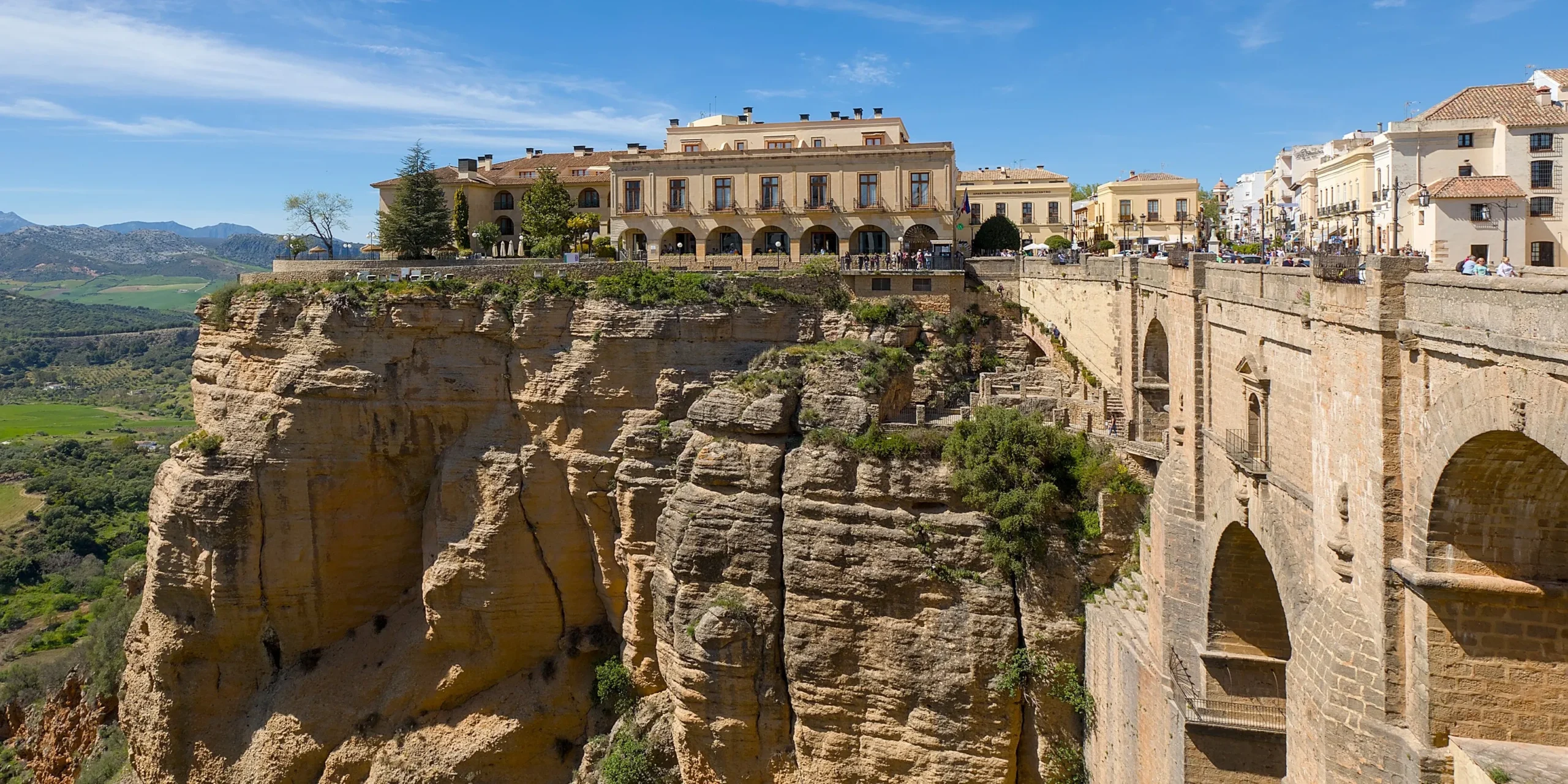
First things first: let’s talk about what you are actually getting into. The word “Parador” comes from the Spanish parar, meaning to stop or stay. The whole concept was started back in the 1920s by the government to boost tourism in rural Spain and save crumbling historic monuments from turning into piles of rubble. It was a genius move. Today, there are around 100 of them. While a few are modern, purpose-built lodges designed to blend into dramatic natural landscapes—like the one sitting right on the rim of the spectacular gorge in Ronda—the vast majority are living history.
Because they are historic buildings, every single room is different. You aren’t getting cookie-cutter layout standardisation here. You might get a room with a massive exposed oak beam across the ceiling, or a window framed by medieval arrow-slits looking out over an olive grove. The service is famously professional, but it’s old-school professional—courteous, dignified, and distinctly Spanish.
While the official booking platforms are fully translated into English nowadays, the actual on-the-ground experience can still feel very authentic. If you choose a Parador in a hilltop village in Galicia or deep in the plains of Castile-La Mancha, the staff might only have a few words of English, and the menus will feature hyper-local dishes you’ve never heard of. That’s not a bug; it’s the main feature. It’s exactly why we travel. But to make sure you don’t accidentally book a standard twin when you wanted a canopy bed in a castle turret, you need to know how to decode the system.
Before we dive into the step-by-step booking mechanics, it helps to understand the three main categories of Paradores you’ll encounter on your route, as this changes completely what kind of holiday you’re getting.
2. The Three Categories & The “Amigos” Loyalty Secret
Now, let’s unpack those three main categories so you can choose the right vibe for your road trip. First up, you have the “Paradores Históricos.” These are the crown jewels—the actual castles, fortresses, monasteries, and palaces. If you’ve ever wanted to sleep behind six-foot-thick stone walls or stroll through a Renaissance cloister at midnight, these are your target. Next, you have “Paradores Naturaleza.” These are located deep inside Spain’s most stunning natural parks, mountain ranges, or coastal reserves. Think alpine-style chalets with panoramic views of the Picos de Europa mountains, or coastal lodges overlooking the wild Atlantic. Finally, there are the “Paradores Urbanos.” These are usually found in historic city centers or high on a hill overlooking a famous skyline, giving you a perfect mix of cultural sightseeing and classic comfort.
Once you know the style of trip you are planning, it’s time to tackle the actual booking process. While you can easily secure rooms through global platforms like Booking.com, there is a major secret weapon that most non-Spanish speakers completely miss: the official Amigos de Paradores loyalty program.
Don’t let the word “loyalty program” put you off—it’s not some exclusive club that takes years to give you any benefits. It is completely free to join online before you book a single night, and the perks kick in the exact moment you sign up. For starters, your very first booking as an Amigo gets you a completely free welcome drink when you arrive. But the real money-saver is the waived booking fee and the automatic access to “Amigos-only” discounted rates, which frequently beat the major booking engines by 5% to 10%.
Another massive perk of signing up is the free parking. Many historical Paradores are perched on steep, narrow hillsides or tucked inside ancient pedestrian zones where public parking is a complete nightmare. If you drive up in your rental car, the Parador usually has a private, secure garage underground or inside the old courtyard. For standard guests, this can cost anywhere from €15 to €25 a night, but for Amigos, it’s often heavily discounted or entirely free depending on the specific seasonal promotion running.
But the biggest reason to book through the official channel—or at least use it to map out your route—is their incredible “Rutas” or pre-planned itineraries. If you’re planning a massive driving holiday across Spain, they offer multi-day route packages (like a 3-night or 5-night pass) that bundle several nearby Paradores together at a massive discount compared to booking individual nights. It takes all the stress out of route planning because they’ve already mapped out the ideal driving distances between historic stops.
Speaking of driving, if you are planning to rent a car to bounce between these historic properties, you need to make sure your vehicle is fully sorted before you leave the airport terminal. For comparing the absolute best rates and securing a reliable vehicle with full insurance coverage, we always use Auto Europe to lock in our rides, as it saves an absolute fortune over booking directly at the counter. For booking your actual hotel stays, if you prefer to keep all your reservations under one single dashboard alongside your other flights and holiday plans, checking the latest rates on Booking.com is a great alternative to ensure you get flexible cancellation options.
Once you’ve got your membership sorted and your car locked in, you need to learn how to decipher the room types on the website, because historic layouts can throw a few curveballs to the unprepared traveler.
3. Decoding Room Types & The Late-Night Dining Culture
Decoding the room categories in a historic building is where things get interesting. In a modern hotel chain, a “Standard Double” is identical on the 2nd floor or the 14th floor. In a 14th-century castle, a standard room might be a beautifully renovated space in the former servants’ quarters, while a “Superior Room” or “Suite” could be the literal bedchamber where a medieval king once slept, complete with stone fireplaces and hand-carved canopy beds.
When you are booking, pay close attention to the descriptions. If a room is listed as Doble Estándar, it will be highly comfortable and modern, but it might face the inner courtyard or have smaller windows. If you want those epic, sweeping views over the valley or the sea, look for Habitación Superior or Vista Panorámica. It’s usually only an extra €20 to €40 a night to upgrade, and trust me, when you’re watching the sunset over the Andalusian hills from your private balcony, you’ll realize it’s the best money you’ve spent all week.
Another quirk to look out for is the bed configuration. In Spain, it is incredibly common for a double room to consist of two single beds pushed tightly together (dos camas). If you strictly want a single, solid matrimonial mattress, you need to look out for the phrase cama de matrimonio. If you are booking in English and aren’t entirely sure, simply drop a quick note in the special requests box during the checkout process stating your preference.
Let’s talk about the food, because Parador dining is an absolute institution in Spain. Almost every single property has its own formal restaurant, and they don’t serve generic hotel food. By law, they are required to showcase the traditional cuisine and wine of the specific region they are located in. This means if you are staying at the Parador in Santo Domingo de la Calzada, you’ll be eating hearty Riojan stews and sipping local Tempranillo. If you’re down in Cambados, you’ll be feasting on fresh Atlantic scallops and crisp Albariño white wine.
The breakfast buffet—or desayuno—is legendary. It’s not just a basket of stale croissants and some instant coffee. You’re talking arrays of cured Iberian hams, local cheeses, freshly baked breads, churros, and a chef cooking eggs to order. When booking your room, you’ll often see an option to include breakfast (alojamiento y desayuno). It is almost always cheaper to bundle it into your room rate at the time of booking rather than paying for it at the front desk each morning.
However, if you plan on eating dinner at the Parador restaurant, you need to prepare yourself for the Spanish timeline. If you turn up at the restaurant doors at 6:30 PM looking for a table, you’ll find the lights off and the doors locked. Spaniards eat late. Dinner service typically doesn’t even open until 8:30 PM or 9:00 PM, and the tables don’t really start buzzing until 10:00 PM. Now that you know what to expect inside the walls, let’s look at the actual logistics of getting to these places, navigating the rural roads, and checking in without a hitch even if your Spanish vocabulary is limited to hola and gracias.
4. Driving Logistics, Sat-Nav Traps, and Essential Apps
Navigating your way to a Parador is where the real adventure begins. Because many of these properties are located in medieval hilltop fortresses, tiny mountain villages, or sweeping national parks, getting there requires a bit of tactical planning. You can’t always rely on a standard sat-nav to guide you smoothly to the front gates. If you just plug the name of the hotel into a basic navigation app, it might send you careening down a cobblestone alleyway designed for donkey carts, leaving your rental car wedged firmly between two historic stone houses.
The golden rule for a stress-free arrival is to check the specific “How to Get Here” section on the official Paradores de Turismo webpage for your property before you set off. They will often give you precise driving instructions, such as: “Do not enter through the ancient town gate; instead, follow the ring road to the northern car park.”
When you do arrive at the property, don’t let the language barrier make you nervous. The front-of-house staff are incredibly well-trained and used to welcoming international travelers. Even if their English is limited, the check-in process is standard across the board. You’ll just need to present your passport, your booking confirmation, and a credit card for incidental charges.
To make your life infinitely easier during your Spanish road trip, there are a few key apps you should download to your smartphone before you leave home. For seamless navigation through tricky medieval towns and rural highways, we always use Google Maps
to keep an eye on real-time traffic conditions and road layouts. If you want to check local weather changes or see if a sudden mountain mist is going to block those epic castle views, keeping tabs on local forecasts with a reliable app like Weather Underground is an absolute lifesaver. For broader route planning and regional festival calendars, checking the official Spain Tourism Portal before you pack your bags is an absolute must.
Once you are checked in and have dropped your bags in your room, it’s time to explore. Most historic Paradores are essentially living museums. You are completely free to wander through the public lounges, inner courtyards, and manicured gardens. Many properties even provide small printed brochures or audio guides in English at the front desk that explain the deep history of the building, detailing who built it, the battles it survived, and how it was restored.
Now that you have the basic logistics down, let’s wrap up this guide with a handy, quick-reference checklist of the absolute best, must-visit Paradores in Spain that deserve a spot on your 2026 travel itinerary.
5. Your 2026 Epic Parador Bucket List
To help you plan the ultimate Spanish road trip, here is a quick-reference checklist of some of the most spectacular Paradores in the network that belong on every traveler’s radar.
First on the list is the Parador de Ronda in Andalusia. Perched directly on the edge of the staggering 120-metre Tajo gorge, this former town hall offers jaw-dropping, vertigo-inducing views of the ancient Roman bridge. It’s the perfect base for exploring the white villages of Southern Spain. Next up is the Parador de Cuenca in Castile-La Mancha. Housed in a dramatic 16th-century convent, it sits right opposite the famous “Hanging Houses” (Casas Colgadas) and is linked to the old town by a thrilling footbridge over the Huecar river canyon.
If you want a true fairytale fortress experience, look no further than the Parador de Cardona in Catalonia. Sitting proudly atop a hill, this 9th-century medieval castle comes complete with an ancient stone tower, Romanesque church architecture, and panoramic views of the Catalan countryside. It feels like stepping straight onto a movie set. Finally, for the ultimate blend of historic grandeur and coastal beauty, check out the Parador de Baiona in Galicia. Enclosed within a spectacular walled fortress on the Atlantic coast, you can stroll along the ancient ramparts while watching the ocean waves crash against the rocks below.
No matter which properties you choose for your route, remember the golden rules: sign up for your free Amigos membership before making any reservations, check the driving and parking logistics ahead of time, get ready to embrace the late-night Spanish dining culture, and don’t let a minor language barrier hold you back. Staying in a Parador isn’t just about finding a place to sleep; it’s about immersing yourself in the rich, vibrant history of Spain.
🇪🇸 More Expert Spain Travel & Logistics Guides
- Weighing up transit choices down south? See my comprehensive Andalusia train vs car guide.
- Driving up north? Be fully prepared for navigating Asturias’ narrow coastal roads.
- Hunting for wild, crowd-free shores? Explore the hidden beaches of northern Galicia.
- Island hopping in the Med? Master your connections with my guide to Balearic transport hubs.
- Visiting a picturesque northern fishing village? Read my complete Cudillero travel guide.
- Heading to the Balearics car-free? Learn how to navigate Menorca beaches without a car.
- Visiting Spain’s Atlantic paradise islands? Lock in your Cies Islands ferry booking logistics.
- Planning a Pyrenees climbing adventure? Check out the best Alquezar climbing accommodation.