Master the ultimate climber’s guide to securing the best accommodation in Alquézar, Spain. Learn how to locate budget-friendly basecamps near world-class limestone crags, discover unique lodging with secure gear storage, and book early to beat the peak canyoning crowds.
Inside This Guide
Where is Alquézar Located?
Map Guide: Zoom out slightly to view Alquézar tucked into the southern foothills of the Pyrenees mountains in northeastern Spain, roughly halfway between Zaragoza and the French border.
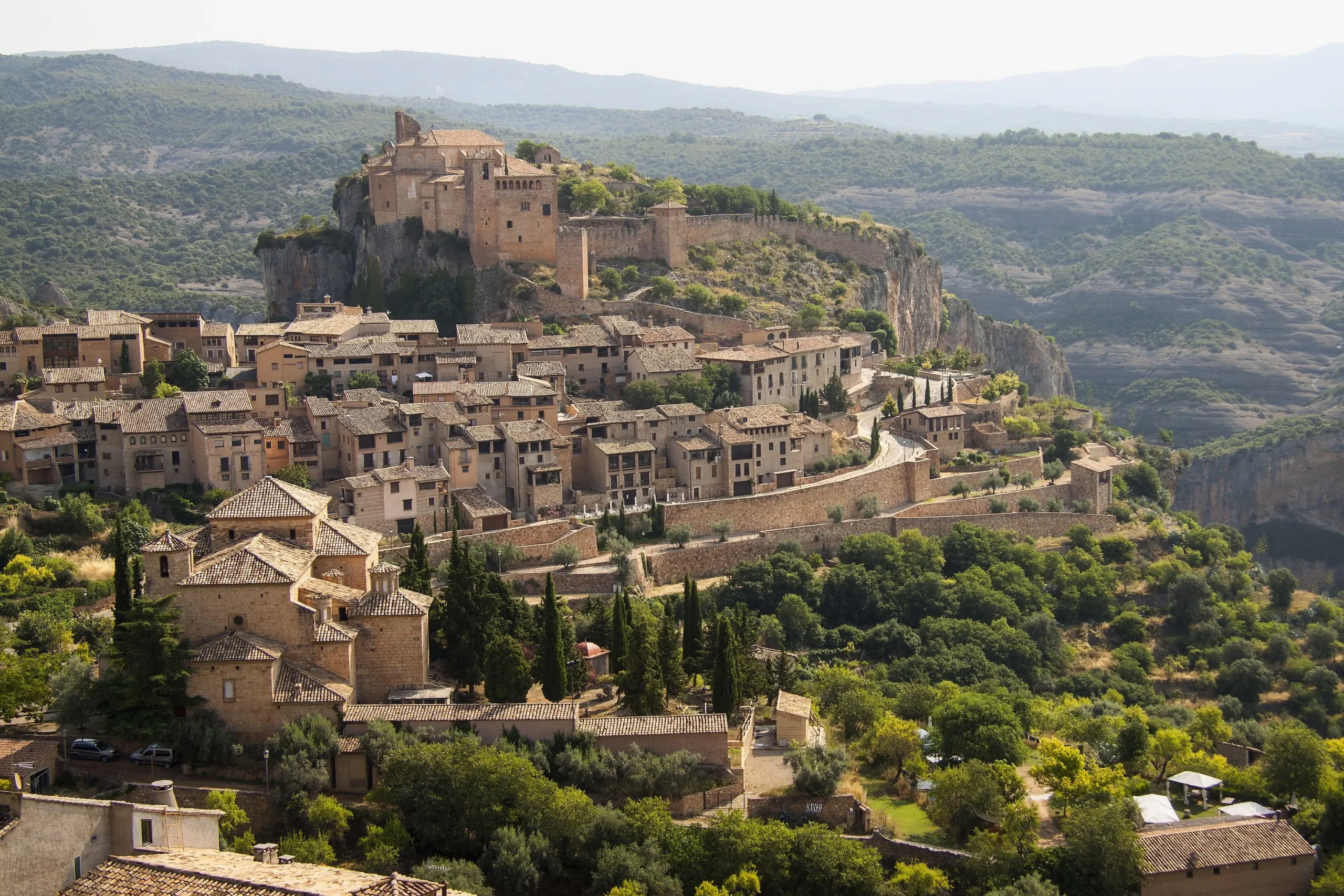
If you’ve ever looked up photos of Aragon, you’ve probably seen Alquézar. It is, without a doubt, a stunning medieval showstopper. A terracotta-roofed fortress clinging to a limestone cliff, looking down into the dramatic depths of the Vero River canyon. It’s the kind of place that tour buses absolutely love, packing the narrow stone alleys with sightseers eating ice cream and buying souvenir magnets by 11:00 AM.
But you aren’t heading here to window-shop for trinkets. You’re coming because the Sierra de Guara holds some of the finest, most punishing limestone sport climbing in Spain. You want massive overhangs, technical tufa lines, and pockets that will test every ounce of your finger strength.
The problem? Alquézar has structurally shifted to cater heavily to mainstream tourism. If you roll up with a van full of crash pads, a 70-meter rope, and a tight budget, booking the wrong spot can leave you broke, stuck in traffic, or dealing with hotel staff who look sideways at your chalk-covered gear.
Before we dive into the dirt on where to set up camp or grab a room that actually respects a climber’s schedule, let’s get the legal housekeeping out of the way.
Quick heads-up: Some of the links in this post are affiliate links. This means if you book a tour or secure a room through them, I earn a small commission at zero absolute extra cost to you. I only suggest things I genuinely trust, and your support keeps this site running!
The Core Verdict: Base Camp Strategy for 2026
When you’re climbing in the Vero canyon or the surrounding crags of the Sierra de Guara, your accommodation choice isn’t just about a bed—it’s about logistics. Alquézar is a pedestrian-only medieval village. That means cars are banned from the historic center, and parking is strictly regulated in designated municipal lots at the top of the town.
If you book a beautiful, boutique hotel right in the center of the old village, you will be hauling your heavy rope bags, quickdraws, and water jugs up and down steep, polished medieval steps every single morning and evening. It gets old incredibly fast.
For climbers in 2026, the strategy is simple: you either want to camp at the base of the canyon to maximize your budget and community vibes, or you want to book a guesthouse or hostal positioned right on the outer perimeter road where you can actually access your vehicle without a 20-minute uphill trek.
Dirtbag Paradise vs. Perimeter Real Estate
When it comes to picking a roof over your head, your choice instantly separates you into one of two camps: those who want the pure community dirtbag vibe, and those who want a hot shower and a mattress that doesn’t deflate by 3:00 AM.
If you are rolling with a tent, a campervan, or a converted estate car, your absolute best home base is Camping Alquézar. Situated just outside the main village structure in a beautiful olive grove, this campsite is a legendary meeting ground for the international outdoor crowd. It is fully set up for the realities of modern climbing trips: clean shower blocks, a bar that serves cold beers to tired athletes, and laundry facilities that can handle mud-caked trousers.
The biggest logistical win here is vehicle access. You can park right by your pitch, throw your gear straight into the boot, and drive out to the sectors without navigating a single medieval tourist bottleneck.
If you prefer a solid wall and a kitchen you don’t have to shield from the wind, you need to look at the hostals lined up along the Avenida Paúles (the main perimeter road leading into the village). Booking a room at a spot like Albergue Rural de Guara or Albergue Las Almunias keeps you out of the pedestrian trap.
You get the comfort of a proper bed, a place to dry out your sweaty climbing shoes on the balcony, and crucially, you are just a two-minute walk from the outer parking areas. You can stroll into the historic center for an evening pizza with your mates, but your morning exit to the crag remains completely seamless.
Block Three: The Seasonal Shift & Bird Nesting Traps
If you think you can just rock up to Alquézar in the middle of July, find a cheap room on Booking.com, and spend all day crushing 40-meter limestone tufa lines, you are in for a brutal reality check.
First of all, mid-summer in the Somontano region is a searing oven. The rock face gets hot enough to fry an egg, your skin friction will be completely nonexistent, and the village will be absolutely choked with hundreds of canyoning tourists floating down the Vero River. Summer is the peak tourist season for family holidaymakers, which drives accommodation prices through the roof and strips out any remaining “anti-tourist” chill factor.
True sport climbers look at the calendar completely differently. The golden windows for sending your projects in Alquézar are from late April to mid-June, and from September through November. During these months, the air is crisp, the limestone is sticky, and the holiday crowds vanish, leaving the village hostals open to the international climbing community.
However, there is an even bigger logistical trap you must navigate if you are planning a spring trip: the wildlife restrictions. Because the Sierra de Guara is a protected natural park, massive swathes of the deep canyon walls are strictly off-limits to climbers from 1st December through to 1st June to protect breeding birds of prey like bearded vultures and griffon encounters.
Crag Restriction Warning: If you book a room blindly in May thinking you’ll be hitting the multi-pitch classics deep inside the gorge, you might arrive to find giant regulatory signs banning you from tying into your rope. Always check the updated seasonal topos at the local Escuela de Montaña de Alquézar or cross-reference the park’s official notices before choosing which sector your base camp should target.
Block Four: Rest Day Food Strategy & The Grocery Trap
The final logistical piece of your climbing trip puzzle isn’t about the rock—it’s about fuel. Because Alquézar caters heavily to weekend sightseers and canyoning day-trippers, the food scene can be an absolute minefield for a climber on a budget. The restaurants in the main square are beautiful, but they charge premium tourist prices for standard tapas and set menus.
Worse yet is the grocery trap. There are a couple of small, independent corner shops tucked inside the medieval alleys, but they have limited stock and highly inflated prices. If you rely on them to buy your daily climbing fuel—like blocks of cheese, fresh fruit, nuts, and local meats—your budget will bleed dry before your trip even hits its stride.
To eat like a king without spending your shoe-resoling money, you need to be smart:
- The Big Supermarket Run: When you fly into Barcelona or Zaragoza and drive up into the foothills, do not head straight to Alquézar. Stop at the massive supermarkets in the nearby hub town of Barbastro. Load your vehicle’s boot with oats, pasta, rice, and water jugs at standard local prices.
- The Bread Exception: For your daily fresh carbohydrates, skip the tourist shops and head straight to the local village bakery (Panadería de Alquézar). Their traditional wood-fired crusty bread is incredibly cheap, absolutely delicious, and will easily survive being stuffed into the bottom of a crag pack for six hours.
- The Climber’s Kitchen: If you booked a room along the Avenida Paúles perimeter road, ensure you double-check that your hostal or apartment includes a shared guest kitchen. Being able to boil your own pasta and prep your own wraps for the crag saves you a fortune compared to eating out three times a day.
Block Five: The Secret Winter Sun Advantage
If there is one final insider secret that separates the mainstream tourists from the seasoned sport climbers in Alquézar, it is winter. While the casual sightseers completely abandon the village when the temperature drops, the local climbing school considers the winter months an absolute prime-time hidden gem.
The geographic positioning of the Vero River canyon creates a highly favorable, protected microclimate. Because many of the high-quality limestone sectors feature a direct, south-facing orientation, the rock faces act like giant natural solar panels. They soak up the intense Spanish winter sunshine while remaining completely sheltered from the biting northern mountain winds and the thick, freezing fog that chronically blankets the nearby Ebro valley floor.
As long as the sun is shining, you can comfortably tie into your harness wearing nothing but a light technical T-shirt, enjoying immaculate friction on pristine 40-meter vertical walls while the rest of Europe is shivering indoors.
The accommodation logistics in winter are also incredibly stress-free. The municipal perimeter parking lots are practically empty, booking the best climber-friendly hostal rooms along Avenida Paúles on Booking.com costs a fraction of the spring prices, and you can wander down the quiet stone streets after a successful day on the crag without dodging a single tour group. Just pack a heavy-duty down jacket for the second the sun drops behind the canyon rim, secure an affordable winter base camp, and enjoy having one of Europe’s finest limestone playgrounds entirely to yourself.
🇪🇸 More Expert Spain Travel & Logistics Guides
- Weighing up transit choices down south? See my comprehensive Andalusia train vs car guide.
- Driving up north? Be fully prepared for navigating Asturias’ narrow coastal roads.
- Hunting for wild, crowd-free shores? Explore the hidden beaches of northern Galicia.
- Island hopping in the Med? Master your connections with my guide to Balearic transport hubs.
- Visiting a picturesque northern fishing village? Read my complete Cudillero travel guide.
- Heading to the Balearics car-free? Learn how to navigate Menorca beaches without a car.
- Visiting Spain’s Atlantic paradise islands? Lock in your Cies Islands ferry booking logistics.
- Looking for historic, high-end stays? Use my expert guide to booking Spanish Parador hotels.