Master the ultimate driving guide to navigating the narrow, winding coastal roads of Asturias, Spain. Learn how to handle tight cliffside switchbacks, local traffic etiquette, and essential safety strategies to explore this rugged, breathtaking northern coastline completely stress-free.
Inside This Guide
🗺️ Asturias Coastal Road Trip Blueprint
Use this interactive map to locate the technical coastal hotspots mentioned in this guide—including the tight village drop-ins at Cudillero and Lastres, down to the hidden inland cove at Gulpiyuri. Pinch to zoom or drag to preview your route before you turn the key.
Drive Tip: Want to save your mobile roaming data on the road? Open this route directly on your smartphone while connected to hotel Wi-Fi and hit “Download Offline Map” to navigate the deep cliffside blind spots completely offline.
1. The Reality of Asturian Coastal Lanes (Size Matters)
Picture this: you’re winding your way along the jaw-dropping green cliffs of Northern Spain, the Cantabrian Sea crashing below, cider houses calling your name, and suddenly—boom. You’re nose-to-nose with a massive agricultural tractor on a tarmac strip barely wide enough for a mountain bike, let alone your hired SUV. Welcome to the Asturias coast, mates. It’s arguably one of the most spectacular road trip destinations in Europe for 2026, but if you don’t know how to handle the white-knuckle, single-track lanes running down to places like Cudillero or Playa del Silencio, you’re going to have an incredibly stressful time.
Quick heads-up: Some of the links in this post are affiliate links. This means if you book a tour or secure a room through them, I earn a small commission at zero absolute extra cost to you. I only suggest things I genuinely trust, and your support keeps this site running!
Let’s talk about the absolute reality of driving here. The main spine of the region is the A-8 motorway—slick, modern, and easy. But nobody goes to Asturias just to stay on the highway. You want the wild stuff. You want to weave down the old N-634 or risk the tiny coastal tracks to find hidden bays.
First golden rule: size matters, and smaller is always better. If you are booking a set of wheels for this trip, resist the temptation to upgrade to a massive family tank. Snagging a compact, nimble car from a trusted aggregator like DiscoverCars is the single best decision you can make before landing at Asturias Airport. A smaller profile means you actually stand a chance when passing oncoming traffic without sacrificing your wing mirrors to an ancient stone wall. If you need alternative fleet options to compare rates, checking out a long-standing broker like AutoEurope will give you plenty of reliable, compact choices with excellent trust factors.
Now, let’s dive into the psychology of these coastal lanes. In Asturias, many of the rural routes leading down to the ocean are flanked by stone walls, deep drainage ditches, or vertical drops. There is zero margin for error. When you’re heading down to iconic spots like the amphitheatre village of Cudillero or the dramatic clifftops of Lastres, the tarmac tightens fast. The local councils do their best, but geography wins every time. You need to drive with your eyes fixed far down the road, scouting ahead for passing places (called apartaderos) and tracking the reflections of oncoming windscreens through the trees.
If you do come face-to-face with a local driver, a delivery van, or a rogue dairy cow, do not panic. Reversing etiquette is everything here. Generally, the vehicle traveling downhill has to yield to the one climbing up, unless the downhill vehicle is significantly closer to a wider passing pocket. It’s all about a quick wave, common sense, and keeping your cool.
Before you even turn the key, it’s smart to check the official Turismo Asturias site for the latest seasonal road regulations, as certain popular cliff routes and coastal access roads get locked down or converted into one-way loops during the peak summer rush to prevent absolute gridlock.
In the next section, we’ll break down the specific parking traps in these cliffside fishing villages and how to avoid the absolute dread of getting wedged in a medieval alleyway.
2. Decoding Village Parking Traps & Tarmac Rules
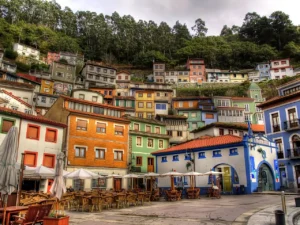
Listen to me carefully: if your satnav or phone map tells you to drive straight into the historic core of an Asturian fishing village like Cudillero, Lastres, or Luarca, do yourself a massive favour and ignore it. These medieval ports were built for fishermen and donkeys, not a modern rental car. If you blindly follow the digital map, you will find yourself wedged into an alleyway that shrinks until your wing mirrors are scraping centuries-old whitewashed stone, while a group of locals watch you struggle from a nearby cider bar.
The premier rule of surviving the coastal villages is simple: park early, park high, and walk down. Most of these towns are shaped like natural amphitheatres. The houses are stacked on top of each other facing the sea, which means the roads leading down to the water are steep, incredibly tight, and often terminate in pedestrian-only squares or boat ramps.
To save yourself an absolute logistical nightmare, it’s all about planning your base camp properly. When you are looking for a place to crash along the coast, filter your search for spots that offer dedicated, hassle-free private spaces. Hopping onto Booking.com and ticking that magical “parking available” filter before you lock in a seaside guesthouse will save you hours of circling narrow streets at midnight looking for a gap. Trust me, paying a few extra Euros for a secure hotel garage outside the historic bottleneck is worth every single penny.
When you do need to use public street parking, you have to decode the lines on the tarmac, which can feel like a game of high-stakes bingo. Here is the breakdown for the Asturias coast in 2026:
- White Lines: These are your best friends. They mean the parking is completely free and unrestricted. If you spot an open white-lined bay near the port entrance, grab it immediately.
- Blue Lines (Zona Azul): This is paid, timed parking. Look for the nearest ticket machine (expendedor), feed it some coins or use the local parking app, and display the ticket clearly on your dashboard.
- Green or Orange Lines: Keep driving, mates. These are strictly reserved for local residents. Park here, and you stand a very high chance of waking up to a hefty fine or finding your rental car hooked up to a local tow truck.
Another massive tip for independent road-trippers: don’t leave your car sitting in a remote clifftop dirt lot with all your holiday gear sitting completely visible in the back. While Asturias is generally incredibly safe, a car overflowing with suitcases is always a tempting target. If you’ve checked out of your room early but want to spend the afternoon exploring the steep trails of a place like Llanes without hauling your bags up a 15-degree incline, check out a service like Radical Storage. Dropping your heavy luggage off at a verified local shop or cafe for a few hours lets you explore the coastline completely hands-free and gives you absolute peace of mind while your car is parked up.
In the next section, we’re going to tackle the unpredictable Asturian elements—specifically how to handle the notorious coastal fog and slick, wet tarmac on the high cliff passes without losing your nerve.
3. Navigating Xirimiri & Sea Fog Like a Pro
If you think a road trip through Northern Spain means baking in continuous, bone-dry Mediterranean sunshine, the Asturias coast is about to give you a magnificent reality check. They don’t call this region España Verde (Green Spain) for nothing. It is breathtakingly lush, but all that vibrant green scenery requires a serious amount of water. In 2026, the weather along the Cantabrian Sea remains notoriously fickle. You can start your morning in bright sunshine and, within twenty minutes, find yourself navigating a clifftop pass wrapped in a blanket of sea fog so thick you can barely see your own bonnet.
The locals have a specific name for the classic weather here: xirimiri. It’s a super-fine, misty drizzle that feels less like actual rain and more like driving through a wet cloud. Don’t let it fool you. This light mist mixes with the dust and oil on the narrow, twisting coastal tarmac, turning the roads into something resembling a grease slick. When you’re bending around sharp, blind corners on a 12% incline near Cabo Vidio, sudden braking on xirimiri-slicked roads is a one-way ticket to a insurance nightmare. Slow your pace right down, leave double the distance you normally would behind the car ahead, and ensure your rental’s headlights are manually switched on—not just left on the automatic daytime running setting.
Then there is the bruma—the heavy maritime fog that rolls off the ocean and gets trapped against the coastal mountains. When the fog drops, your visibility drops to near zero.
When you are deep in these rugged coastal dips, standard mobile roaming signal can be incredibly patchy. The absolute last thing you want is for your navigation app to freeze or drop out entirely right when you’re trying to figure out which unmarked fork leads to safety and which one drops straight into a private farmyard. To avoid this, grab a travel eSIM from a global provider like Airalo before you head out. Having a solid, dedicated data connection means your live maps can seamlessly reroute you, download offline backups, and keep you updated on real-time traffic hazards even when you’re tucked away in a deep coastal valley.
To keep track of sudden weather shifts before you head over the coastal passes, make it a habit to check the official Spanish meteorological network, AEMET. They provide highly accurate, localized radar updates that tell you exactly when a heavy sea fog bank is rolling into your specific sector of the coast.
Driving these narrow, high-consequence lanes demands total concentration, and mistakes can happen to even the most experienced road-trippers. Because these rural roads are bordered by steep drops and old stone walls, throwing a robust safety net over your trip is just smart planning. Before you set off, jump on a comprehensive platform like VisitorsCoverage to secure premium travel medical insurance and complete peace of mind. Knowing you are fully covered for any unexpected mishaps on these technical European routes lets you relax and actually enjoy the epic scenery instead of white-knuckling the steering wheel in sheer panic.
In the next section, we are going to dive into the living, breathing obstacles you will absolutely encounter on these roads: local tractors, free-roaming mountain livestock, and the golden rules of passing etiquette when there’s no room to spare.
4. Tractors & Cows: Meeting the Real Kings of the Road
Right then, let’s talk about the absolute bosses of the Asturian tarmac. It isn’t the regional police, and it definitely isn’t you in your rental car. The real rulers of these narrow coastal lanes are the local farmers in their massive tractors and the legendary Casina beef cattle. If you think you automatically have the right of way just because you’re driving a shiny modern hatchback, the rural realities of Northern Spain will give you a proper reality check very quickly.
First up: the livestock. In Asturias, the green pastures run right down to the cliff edges, meaning it is completely normal to round a sharp, blind bend and find three massive, horned brown cows standing squarely in the middle of the road, chewing the cud without a single care in the world. Here’s a massive tip: do not blow your horn. Asturian cows are completely deaf to city anger. Blaring your horn will only stress them out, or worse, make them stubborn enough to sit down right on the tarmac. Instead, creep forward at a snail’s pace, rev your engine gently, and let them casually amble into the roadside grass at their own pace.
Then you have the agricultural traffic. The local farmers know every single twist, bump, and hidden pothole on these roads because they’ve driven them for decades. They move at their own speed, and they expect you to adapt. If you get stuck behind a slow-moving tractor hauling silage down to a coastal farm, do not attempt a risky overtake on a blind, narrow curve. Just sit back, enjoy the spectacular sea views, and wait for them to pull into a field entrance or a designated passing pocket.
If the sheer thought of reversing down a single-track cliff lane with a massive tractor staring at you through your windscreen gives you a proper case of the cold sweats, there is no shame in admitting defeat. You don’t actually have to drive to experience the best of this coast. You can easily outsource the stress by booking a private intercity transfer or an independent local chopper through GetTransfer.com. It lets you sit back, look out the window at the dramatic cliffs, and let a seasoned local professional handle all the white-knuckle maneuvering for you.
However, if you’re determined to tackle it yourself but realize the car you grabbed at the airport feels way too bulky for these tiny gaps, you can always pivot. Snagging a tighter, low-cost city car midway through your journey via an aggregator like Economybookings.com lets you easily compare localized price quotes and swap to a much smaller set of wheels to boost your confidence.
To keep yourself fully updated on any unexpected rural road closures, major agricultural blockages, or updated regional driving laws, make sure to keep tabs on the official Spanish traffic authority, DGT. They provide live updates on road conditions so you don’t accidentally drive straight into a localized bottleneck or a major livestock migration route.
In our final section, we’re going to tie everything together with a handy, step-by-step checklist of the ultimate coastal routes to practice your new skills, including the secret track to the bizarre inland beach of Gulpiyuri.
5. The Gulpiyuri Game Plan & Alternative Transport
To wrap up your ultimate coastal survival guide, let’s talk about the absolute crown jewels of the Asturian edge and exactly how to map out your routes without losing your mind. If you’ve followed the rules we’ve laid out so far, your confidence should be high, your rental car should be compact, and your eye should be firmly trained on the horizon for those passing pockets.
Let’s start with the ultimate test of your new skills: the legendary route to Playa de Gulpiyuri. If you haven’t heard of it, Gulpiyuri is a bizarre, fully inland beach tucked away in the middle of a green agricultural field near Llanes. The ocean waves roll through a network of underground limestone tunnels, creating a miniature sandy cove hundreds of metres from the actual coastline. It is a must-see for 2026, but the track leading to it is notoriously tight.
Here is your exact logistical game plan for Gulpiyuri: do not try to drive your car right up to the field gate. The dirt track shrinks down to nothing, and turning around is an absolute nightmare. Instead, take the exit off the AS-263, park your vehicle in the large, designated tarmac lot at the nearby Playa de San Antolín, and enjoy the stunning, easy fifteen-minute coastal walk over to Gulpiyuri. It saves your clutch, saves your sanity, and protects the delicate local ecosystem.
If the sheer thought of squeezing a standard car through these rural bottlenecks still gives you a proper case of the jitters, there is a brilliant alternative strategy. Swapping out four wheels for two is an absolute game-changer in Northern Spain. Logging onto a dedicated platform like BikesBooking.com lets you secure a nimble scooter or an e-bike for your coastal hops. On a scooter, those terrifyingly narrow lanes suddenly feel incredibly wide, parking is an absolute breeze even in the tightest ports, and you get to experience the crisp, salty air of the Cantabrian Sea completely unfiltered.
For the days when you want to look at the view instead of staring down an oncoming tractor, you can easily let someone else take the wheel. Head over to GetYourGuide and book a curated local day trip or a guided coastal safari through the region. It is a fantastic way to discover hidden cliffs, secret cider houses, and historic lighthouses with a passionate local guide who knows these technical routes like the back of their hand.
Ultimately, navigating the narrow roads of the Asturias coast comes down to an old-school driving philosophy: slow down, be patient, and respect the locals who keep this beautiful region running. If you don’t rush, keep your eyes open, and embrace the occasional backward maneuver, you’re going to experience one of the most wild, rewarding, and completely unforgettable road trips in all of Europe.
🇪🇸 More Expert Spain Travel & Logistics Guides
- Weighing up transit choices down south? See my comprehensive Andalusia train vs car guide.
- Hunting for wild, crowd-free shores? Explore the hidden beaches of northern Galicia.
- Island hopping in the Med? Master your connections with my guide to Balearic transport hubs.
- Visiting a picturesque northern fishing village? Read my complete Cudillero travel guide.
- Heading to the Balearics car-free? Learn how to navigate Menorca beaches without a car.
- Visiting Spain’s Atlantic paradise islands? Lock in your Cies Islands ferry booking logistics.
- Planning a Pyrenees climbing adventure? Check out the best Alquezar climbing accommodation.
- Looking for historic, high-end stays? Use my expert guide to booking Spanish Parador hotels.